Lake Kariba comes into view as we bounce our way over the Matusadona mountain range in our tiny 12-seater plane. It’s taken just over an hour for the sprightly Cessna caravan to zip us up from Harare, in the middle of Zimbabwe, to a grassy airfield deep inside the national park.
Two land rovers wait for us, drinks on board, and once luggage is transferred and the little plane has headed back into the sky, we make our way to paradise – beers in hand – across red-sand roads that weave their way through a forest of mopane trees, playground for baboons.
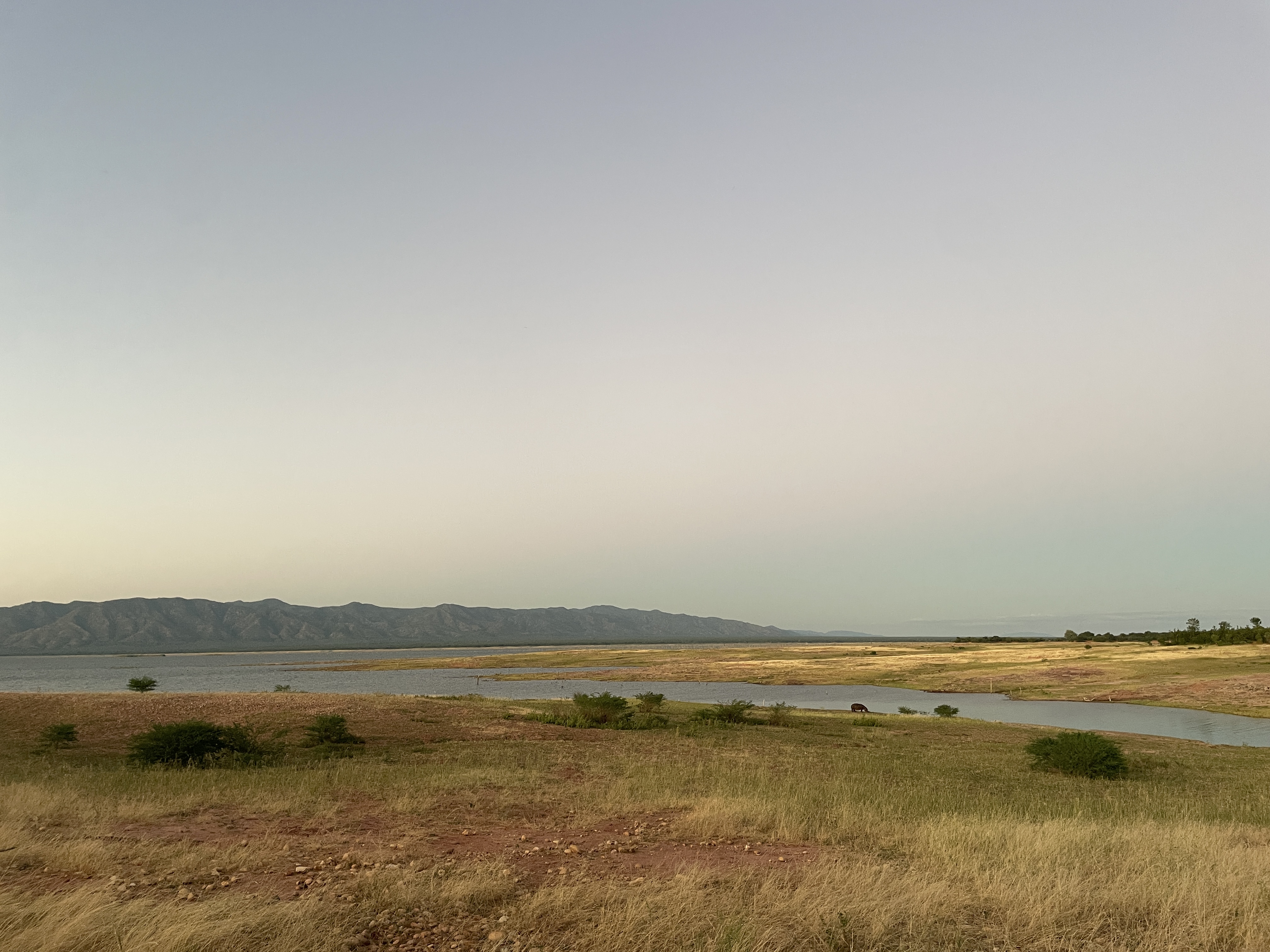
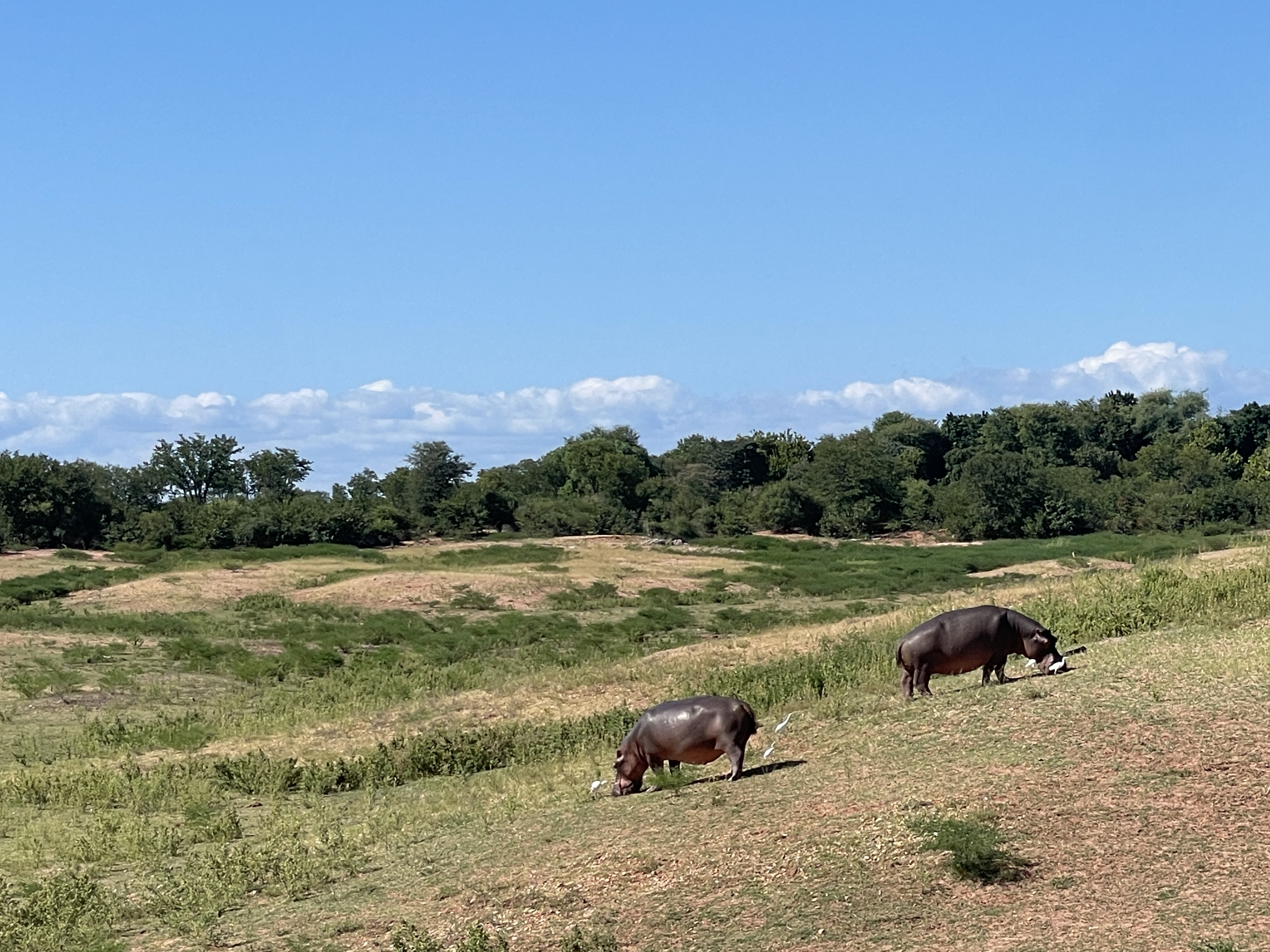
Rather than hiring a houseboat, which is a popular way to experience this part of the world, and something we did 25 years ago, we’re land-based this time, staying at Spurwing Island Lodge. It’s an island when the lake is fuller than it is now, but the recent drought means we can drive all the way in. Emerging from the trees, we cut across a mustard-coloured savannah, wind our way around the flood plain all shades of pink and beige, before finally making our way down a narrow lush and green spur of land, bays on either side, teaming with life. Impala stare at as with bravado that speaks to little human interference, and a hippo with baby ignores us magnificently.
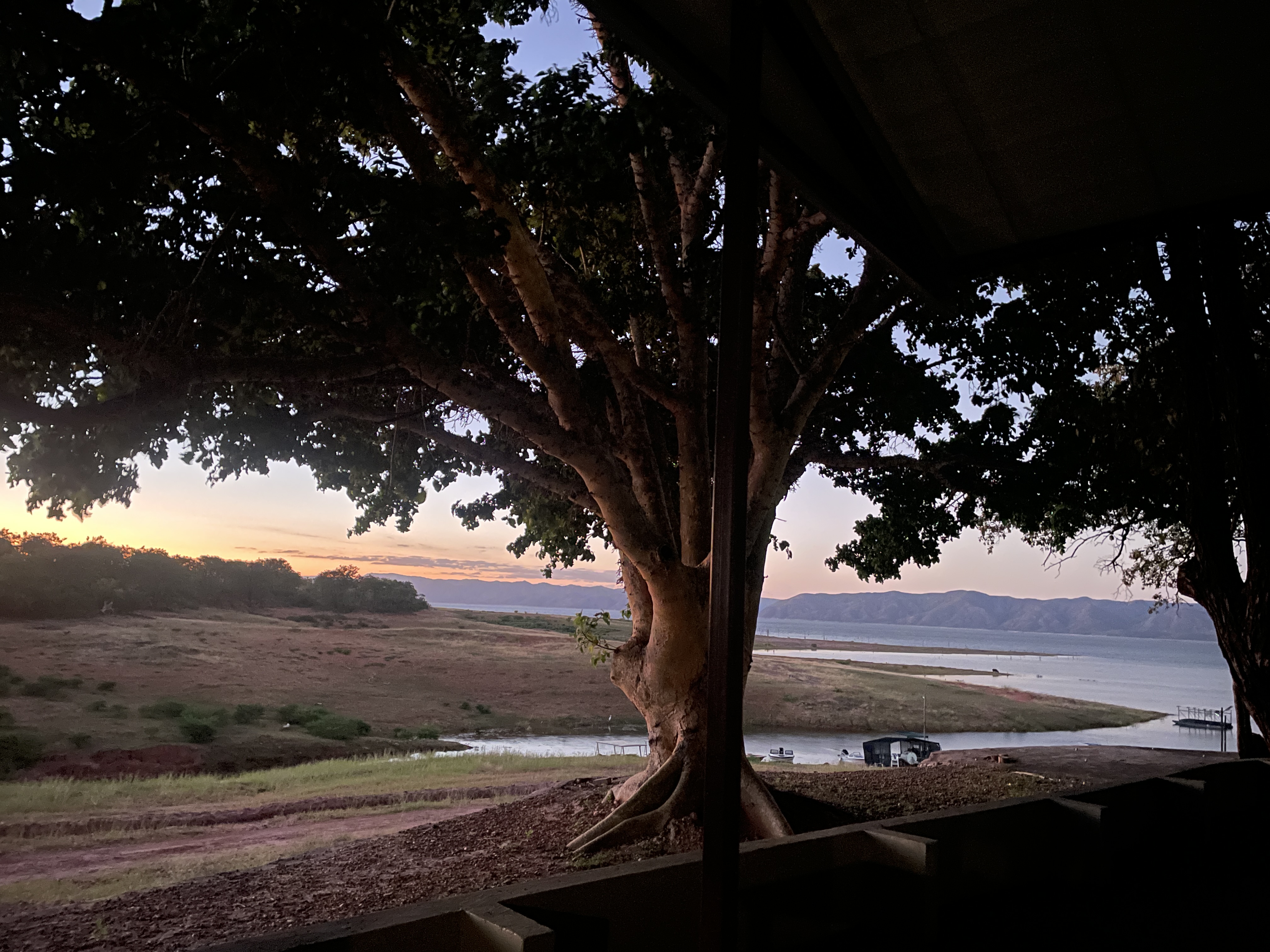
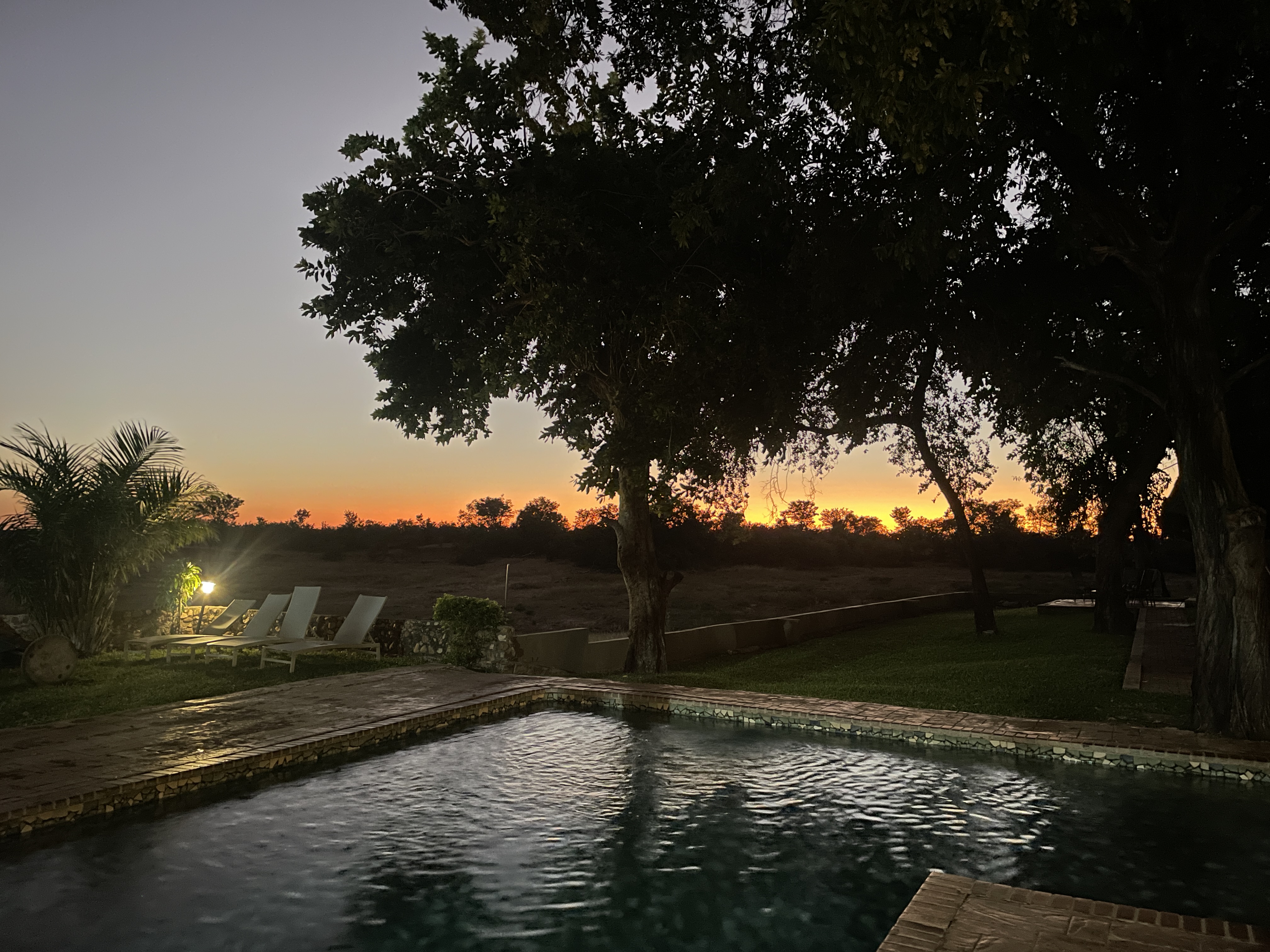
Our lodgings for the week are tent-style cabins, luxurious without being over-the-top. They are nestled beneath gigantic trees, thick with age and lush with foliage, that form a canopy for the entire resort. The outdoor dining area and bar, with thatch covered rooves, encircle the pool a stone’s throw away. From our private deck, we look out into a narrow stretch of water to a ridge, rich with bird life, and are joined loudly, as dawn breaks, by monkeys that clatter onto our roof and scurry across the balcony in search of morning tea.
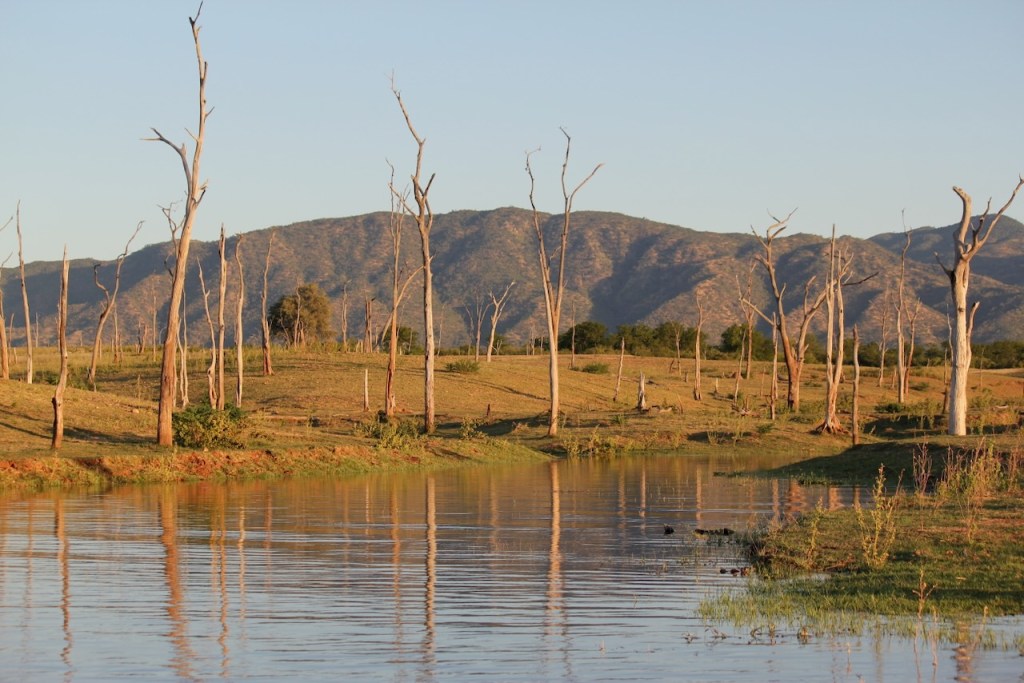
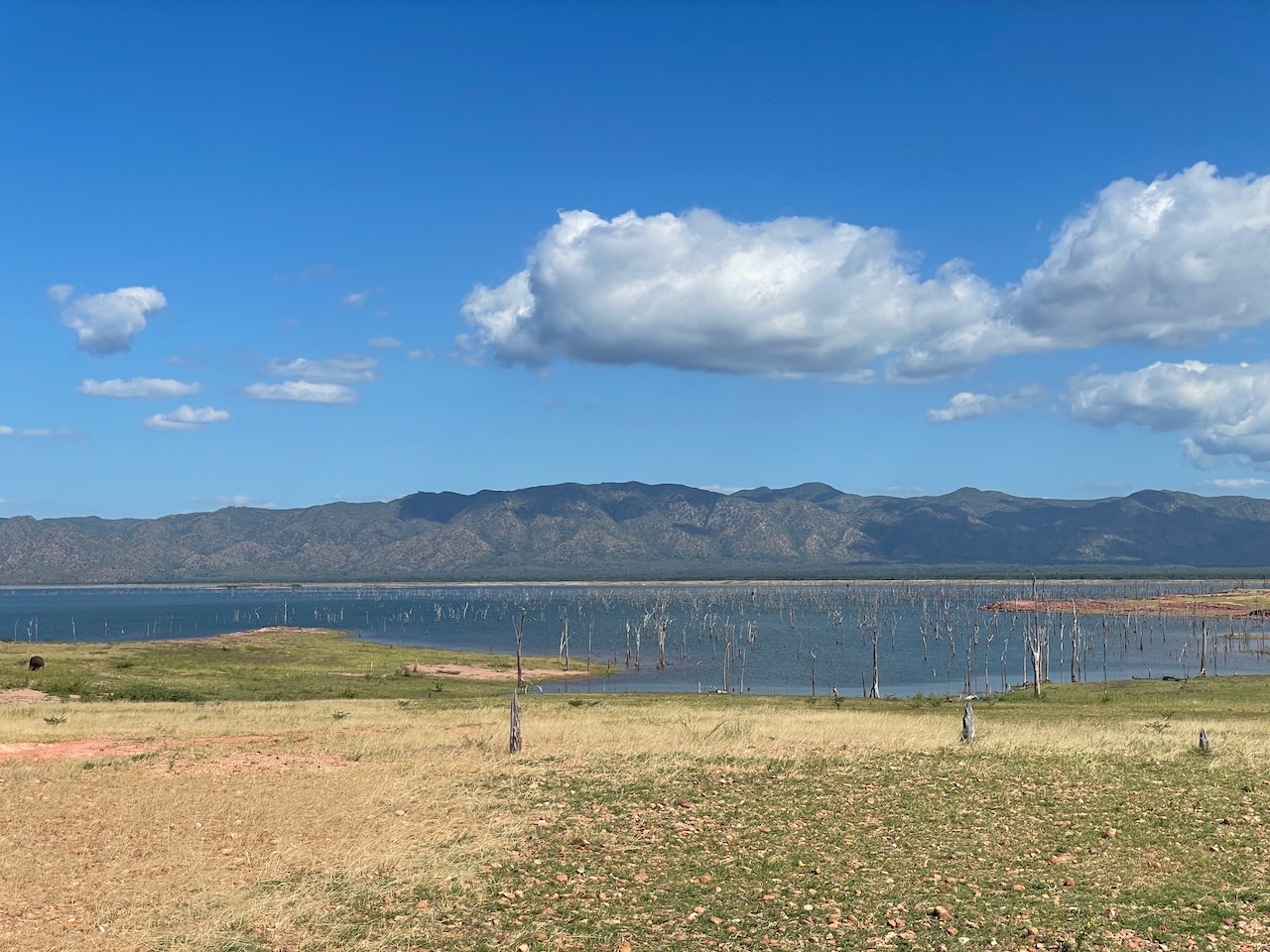
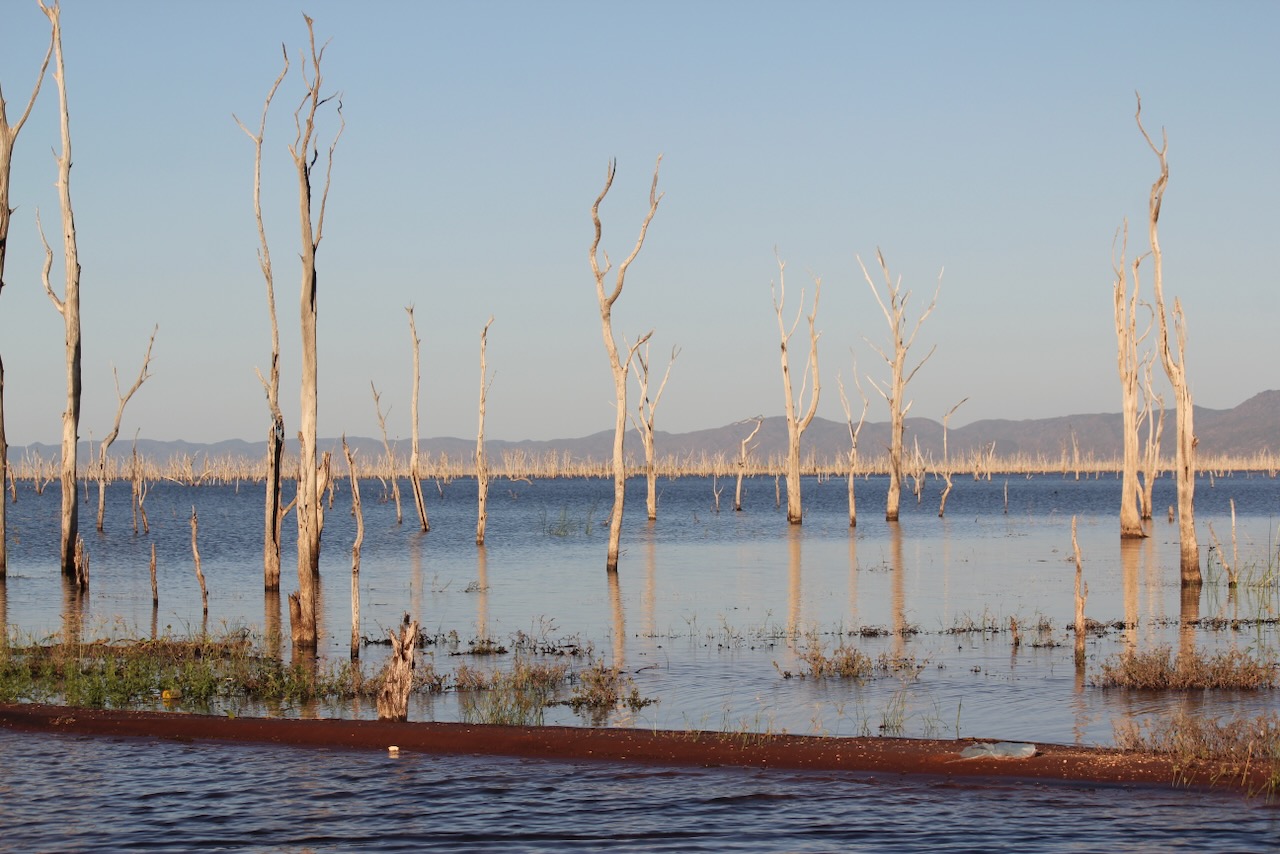
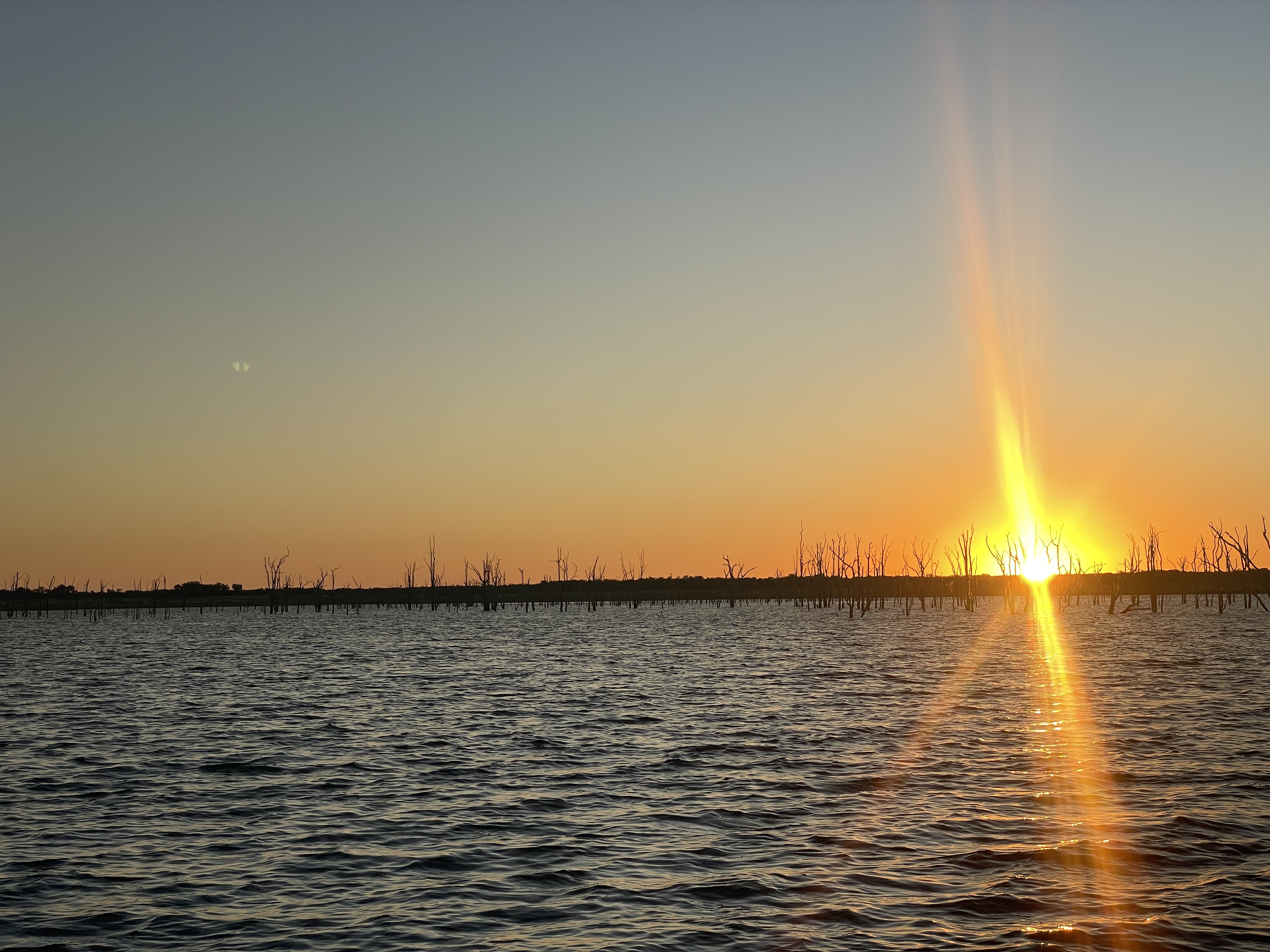
There is something magical about this place. A vast stretch of croc and hippo filled water, blue as the sea, with white, petrified trees rising likes ghosts from the shallows. It is this feature, the skeletons of long dead trees, as hard as rock, reaching out from a watery grave, that give Kariba the backbone of its character. In their branches sit white-hooded, proud-chested fish eagles, magnificent birds with an unmistakeable call, that too are symbolic of this place. And when the sun goes down, in riotous colours of apricot and oranges, and elephants play at the water’s edge, they form silhouettes that serve as exclamation marks to nature’s own brilliance.

Lake Kariba is huge. Nearly 230 km long and 40km wide, and over 90 meters deep in some places. Created 70 years back by harnessing the mighty Zambezi River, itself fed by rains from as far north as the jungles of the Congo, this dam, by volume, is still the largest man-made body of water in the world. Fisherman love it for the opportunity to tussle with a tiger fish.
We’re staying on one end, across the water from Kariba town, the dam wall and Sanyati gorge. It is peaceful here, largely undiscovered by throngs of tourists that clutter up so many other destinations. One could be forgiven for sitting around the pool and doing as little as possible, but there is time in every day for other adventures too.
Gone Fishing
We fill one day with fishing, although almost all of us do not, as a rule, fish. The boat is packed with lunch and beverages, and our guide, the wonderful Maxwell, takes us across the lake, bumpy with wind-swept swell, and into the narrow shelter of Sanyati gorge, where the water is the colour of mud from recent rains and the cliffs rise up dramatically on either side. We motor along, keeping a wary eye out for crocodiles and hippos lurking beneath us. There are strict instructions to keep our hands in the boat, and adrenaline spikes when we see hippos slip beneath the surface, and disappear completely. Hippos are not to be taken lightly, and it’s best always to keep your distance.

Fishing, it turns out, seems to mostly involve drinking, talking and holding a rod made ready by Max. To be completely fair, Max is doing pretty much everything. Between handing out drinks, he puts worms on hooks, helps people cast and reel in, removes whatever they’ve caught, and throws back the unwelcome squeakers. A squeaker, a type of upside down catfish, gets its name because it squeaks like a dog’s toy when wrenched out of the water. We snag far more of them than we would like.
We’re after bream, an eating fish, and Max knows where to go to try our hand. To great cheers, we eventually land one and the game is suddenly on. For his part, amidst everything else, Max also throws in a couple of lines. He’s hardly finished sorting out someone else’s fish before he reels in two of his own to add to the communal net. It silences the squeaker catching naysayers on the boat complaining that the bream have gone.
That evening, after a lie down and warm showers, we meet back up at the bar. There is an animated hum of happy people reliving their day. As the sun sets in a cacophony of vibrant tangerine, the water laps gently against the nearby shoreline and ice clinks in raised glasses. Our catch of bream arrives on a platter – filleted, battered and deep fried with fresh lemon – an evening snack to accompany our cocktails. Melt in your mouth delicious, fresh fish beats bar-nuts any day of the week. We eagerly hove in, and as seems to be bush etiquette, share our haul with our fellow visitors, who in turn do the same when theirs arrive. And then is time for dinner.
Animal Viewing
Situated in the heart of a national park, animal viewing is a key activity. There are many ways to see the wildlife here – not least sitting around the pool and watching the water’s edge. You can do a game drive, a boat cruise or a guided walk. We did all three.

The walk takes place early in the morning, and I’m part excited and part terrified. I suspect I feel more relief than disappointment that we don’t come face to face with an elephant. Instead we trek carefully through the river bed, and get to know the various spoors of the different animals who have passed earlier in the day. Leopard prints make their way into a thicket. Ben, our guide, shows us how to read recent elephant tracks, unmissably large and wrinkled. Distinctive scuffs mark the front of the footprint, and give a clear indication of the direction they’re heading in. Ben is an experienced animal tracker, and he neatly takes us in the other direction. We stop briefly to survey the bush when we hear both a scuffling sound and an oxpecker, frequent companion of buffalo, nearby. As we emerge out of the shade of the valley onto a plain covered in impala rutting and chasing each other in the sunshine, Ben carefully checks the surrounds for lion.

Our game drive takes place on the other end of another day, and safe in our vehicle, it is lion we are desperate to see. We are lucky enough to see both the pride sleeping in the shade of a copse of trees, and, later, the male pride lion, head honcho, resting on his own some way away. He is getting on in years, and although still magnificent, looks a little battle-worn. When we come across him he is fast asleep, as though he has no care in the world. This could not be further from the truth.
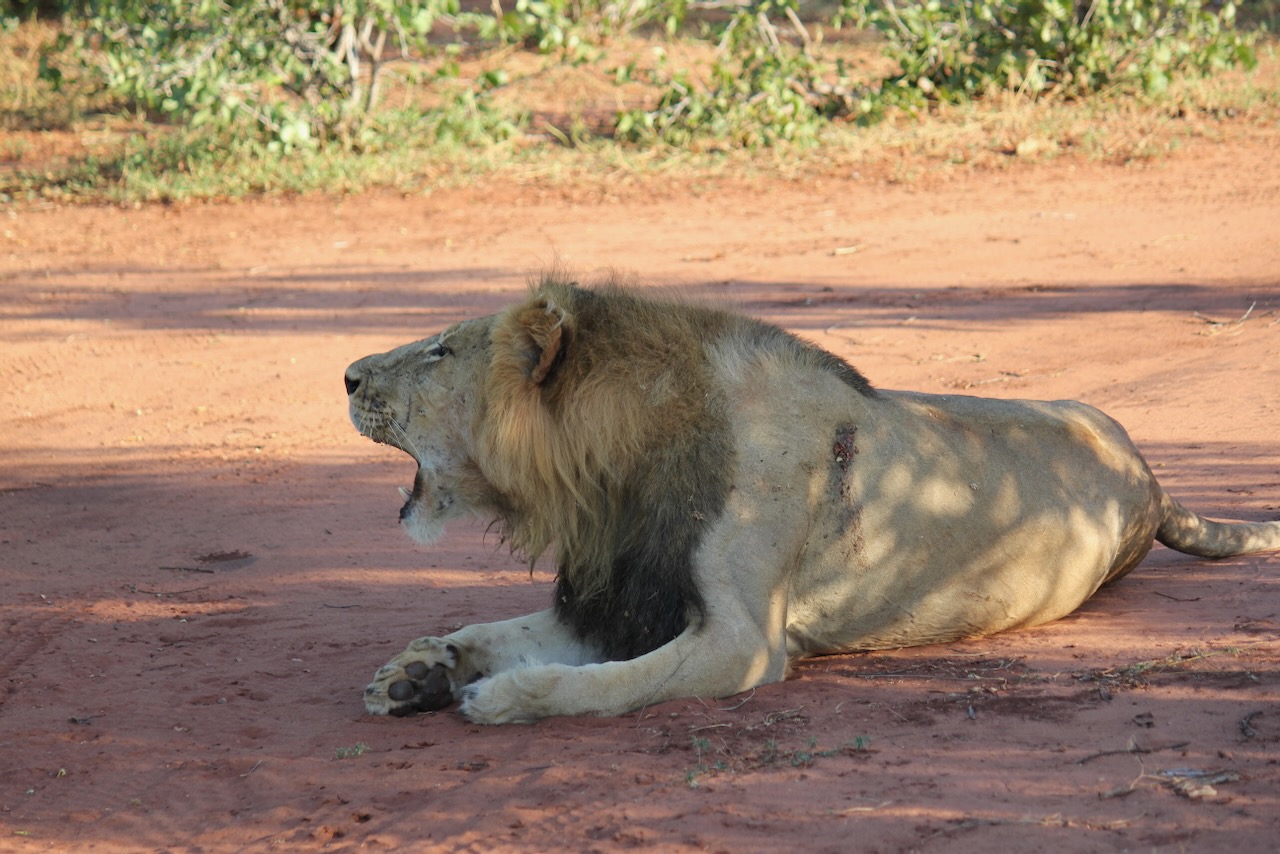
He wakes up when we are midway through our G&Ts, rolls over, yawns and stretches – much like a ridiculously oversized, supremely dangerous house cat. And then, not two meters from us, he roars a throaty, throbbing cry of dominance and pride. A male claiming his territory. Unfortunately for him, the roar is answered not by his pride, but by two other lions. Interlopers from another game park, these brothers are on the hunt for women of their own. Our hero lion skulks quickly off into the forest, tail low, limping a little and sporting an ugly red gash on his shoulder.
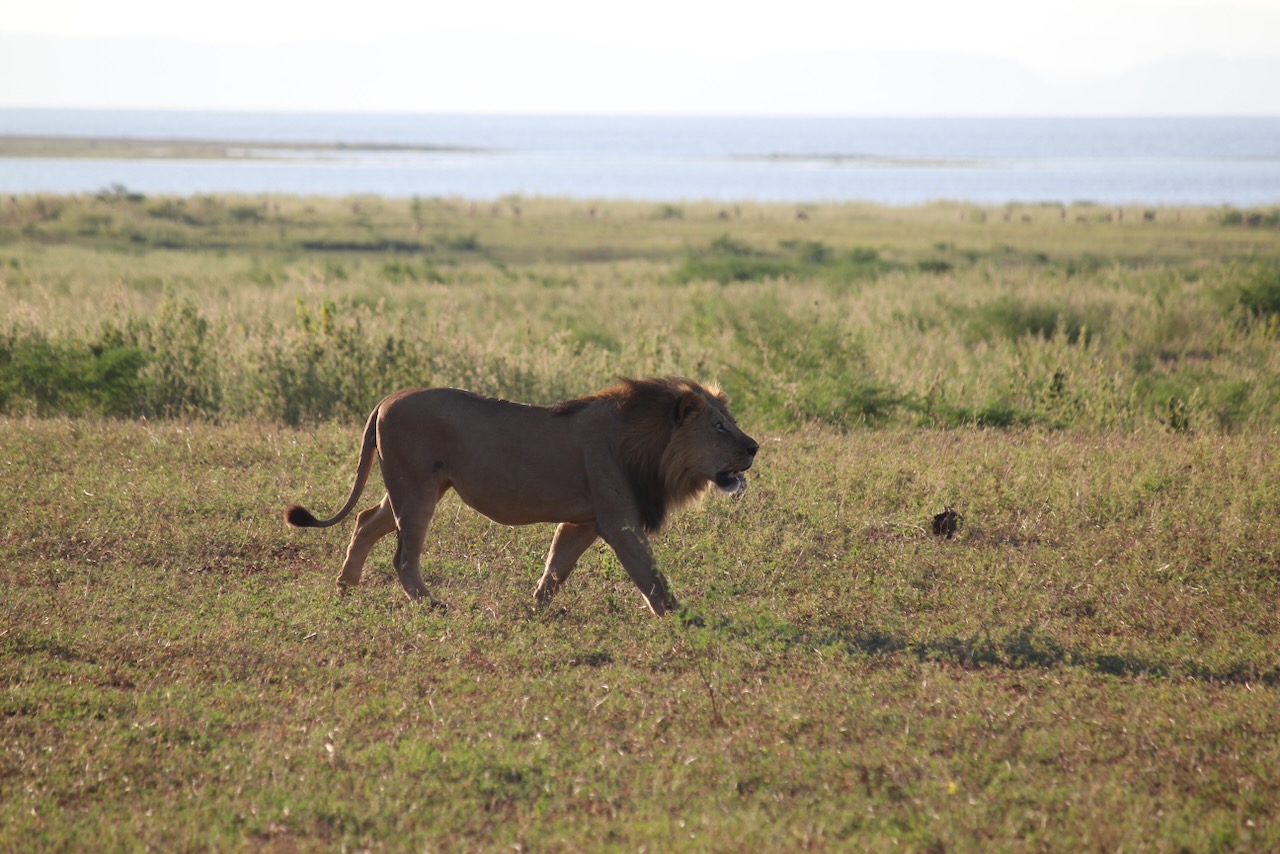
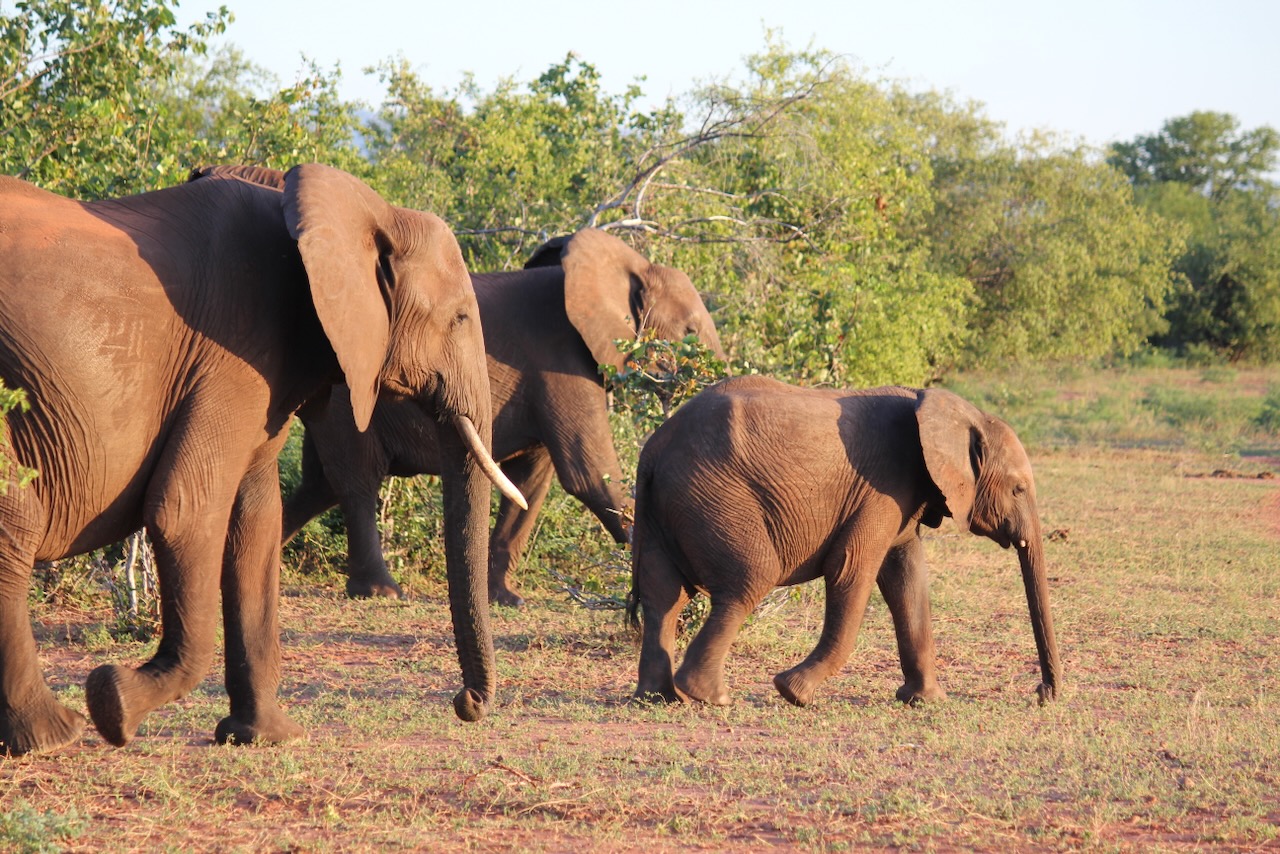
Ben starts up the truck and heads in the direction of the responding roar, stopping to listen and look before pulling up gently just as the two younger males, bearded and on the prowl, stalk their way purposefully out of the trees and across the plain. They scent opportunity, and are quickly chasing the pride lion down. It is only when they’ve moved on that we realise we’ve all been holding our breath. We make our way back through a breeding herd of elephant, large and small, eating their way to waters edge, as the sun sets, and day seeps into night.
Over drinks that evening, the talk turns to the excitement of the lions. The game rangers recognise this as nature, necessary and cruel, to keep the genetic pool of the pride healthy. But they have watched this family for four years, and they understand the carnage that comes when a new male takes over the pride, and they feel like they know the lion king himself. Their pragmatism is tainted with sadness.
Before you know it, it is time to return home. We spend our last evening on a boat, watching the sun set over the land and the naked trees that live in the water turn from white to black in the changing light. Crocodiles slip into the water as we approach, sliding beneath our boat silent and deadly. A pair of elephants play at the edge of the water and a pod of hippos, well submerged, peak out of the water as we go by. As the earth rotates and leaves the sun behind, I feel at one with the universe.
Overall, we spend four days in Kariba, and it is long enough to be deeply rested, but I have a strong sensation I could stay on. I feel a strange affinity to this place that I cannot quite describe.
Zimbabwe is the land of my birth and was the home of my grandparents, when they still lived. Although I did not grow up here, I have strong memories associated with the country. Childhood trips to visit grandparents, a family trip to Lake Kariba and another to Vic Falls. A trip by myself for my university friend’s wedding. A mother-daughter trip where I drove my mum through the country for my grandparents’ golden wedding anniversary. A trip with my now husband and other friends to stay on a houseboat on this very lake.
Perhaps it is because it feels like a place time and progress has forgotten? A land so similar to its past that it feels familiar to my youthful recollections. In many ways it is a land still strongly connected to nature. Perhaps it is the beauty of the sunsets and the velvety richness of the night sky, uninterrupted by development and light pollution, that viscerally connect with me. Or perhaps there is something about our place of birth or memories of childhood that resonate with us deep in our bones. That speak to us about where we come from and who we are.
Whatever it is, it is a place I want to return to again.
 Midlife Unpacked
Leave a comment