A three day wilderness trail in The Kruger National Park is the perfect balance of relaxation and excitement.
It is not without some trepidation that we book a wilderness walk in the Kruger National Park. Afterall, waltzing around on foot in this wild, protected environment, home to the big five and a whole host of other predators, is definitely discouraged by both authorities and common sense.
The Kruger, a protected wild life reserve on the east coast of South Africa is widely considered one of the best-managed and most biodiverse parks on the continent. It has the highest variety of large mammals in any national park globally, and covers more than 20,000 square km of land. Within its borders, animals’ endemic to Southern Africa have had a space to roam freely, as nature intended, for nearly 100 years. It is the perfect place to see wildlife as it is meant to be, protected as much as possible from the toil of sharing a planet with humans.
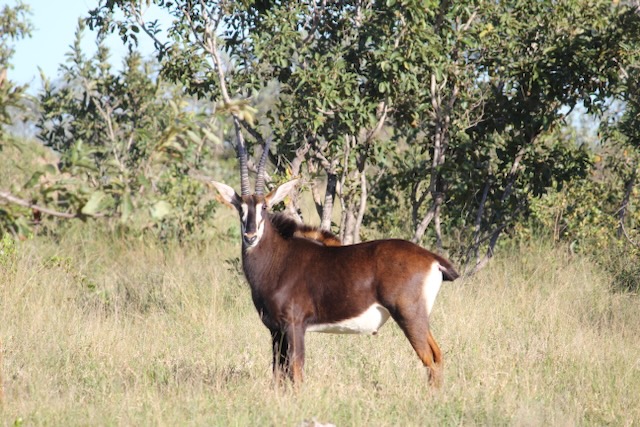
There are many ways to experience the Kruger, from self-drive, affordable camps to guided day trips, to expensive, luxury resorts operating as concessions. But, unless you are with a qualified guide on an official tour, you have to stay in your vehicle. Windows up, recommended.
A walk then feels adventurous.
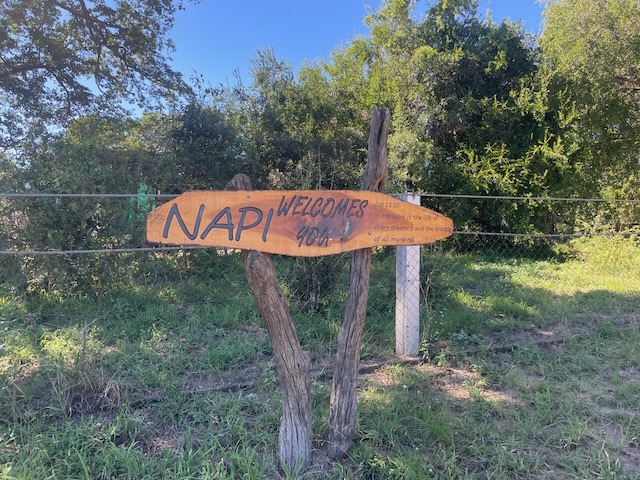
SANParks offers several multi-day wilderness trails, in different parts of the park. The expanse of land means you can walk through quite different landscapes, with different expected encounters. We choose Napi, on the recommendation of a friend. Napi is more elephant country than lion country, and that suits me just fine.
We arrive in Pretoriuskop in the afternoon, to be picked up by one of our lovely guides – Thomas – who transports us and our belongings to the wilderness camp. It is off the beaten path, down a “no entry” fire trail, which we have to navigate with extreme care due to unprecedented rain in the recent past.
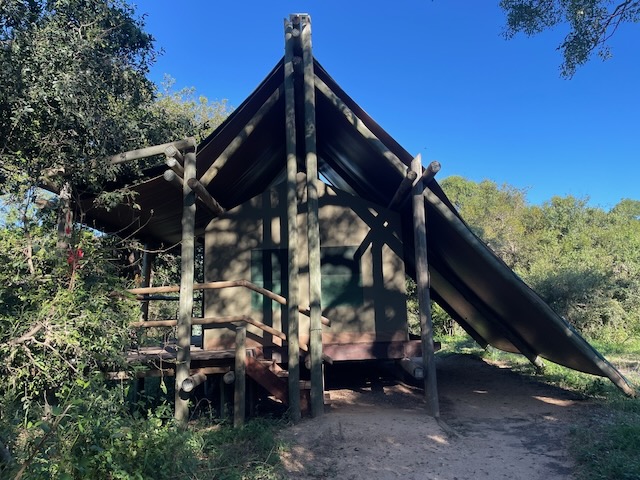
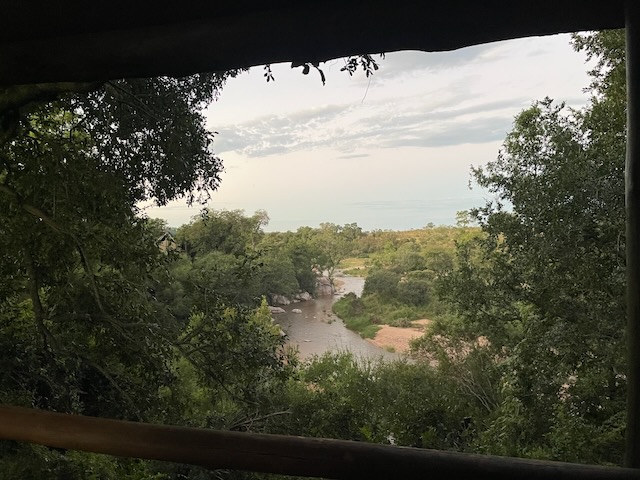
Napi camp is rustic and delightful. The rest camp overlooks the Napi river where Kudu come to drink, and the bird life is prolific. Under a thick canopy of tree foliage, accommodation consists of four, separate safari tents, with ensuite bathrooms, each with their own veranda looking out into the bush.
There is a communal dining area, and chairs set up around a fire pit for evening drinks and star gazing. From every place, there is the opportunity to look out into the wild and spot game life.
There is no electricity, but it is fully catered. We bring our own drinks. Mama Napi, as the guides call her, serves up hearty food for lunch and dinner. Breakfast consists of coffee and rusks, with snacks to break up the early morning walk.
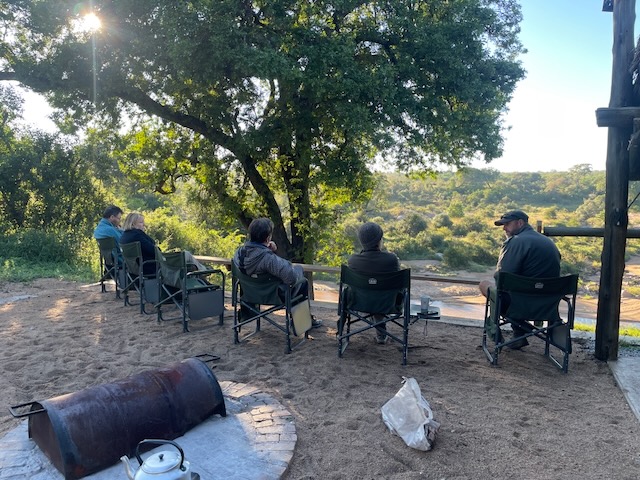
We arrive on Wednesday night. On our drive in, we’ve seen elephants and buck, giraffe and zebra. And now, as we watch the sunset into the east, gin and tonics in hand, waterbuck and kudu pass by the camp. We meet the head guide, Ewout, who gives us a briefing, and sets our expectations.
This is not a hunt. We should not expect to see the big 5 from 2 meters away. We must be quiet, and pay attention. We must, at all times, follow their instructions. And so on.
I’m eager not to be eaten in the wild, so I pay close attention. It is clear that here is a man who loves the African bush, and who knows it intimately. He is warm and relaxed, and enthusiastic for us all to share in his passion. We are all bubbling with excitement.
Mostly, he tells us, we should take the opportunity to look around as we walk. Look for the small things, the flora not just the fauna. And we should try to be in the moment. To get out of our heads, and breath in the wonders of the African bush.
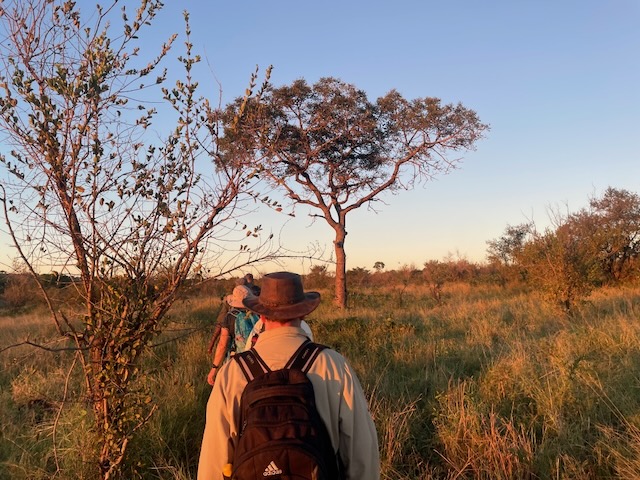
Each day is broken into two walks. A big one, about 10km, in the morning, before it gets too hot for animals both human and four legged, and a shorter one in the late afternoon – as dusk approaches and the animals move about. In the middle of the day we relax in camp – napping, bird watching, eating.
The walks are not arduous, but require a good level of general fitness. The underlying hum of adrenalin raises the heart rate a little, and the tall grass – overgrown for this time of year due to the rains – means we do a lot of knee lifts along the way. We walk in single file, rotating the order as we go.
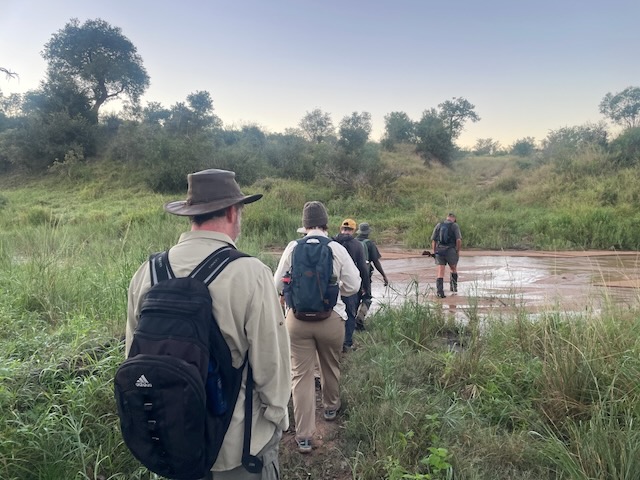
Despite not speaking, we are loud. We swish and stomp through the bush. The chances of us coming upon an unsuspecting animal is about zero. We have a new respect for hunters. Not for the killing, but the ability to creep up on animals in the first place.
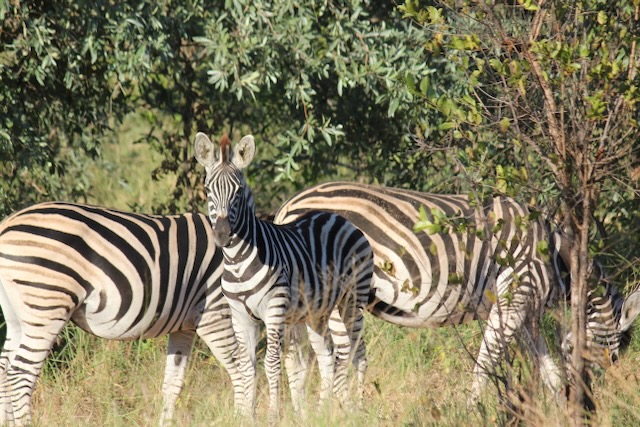
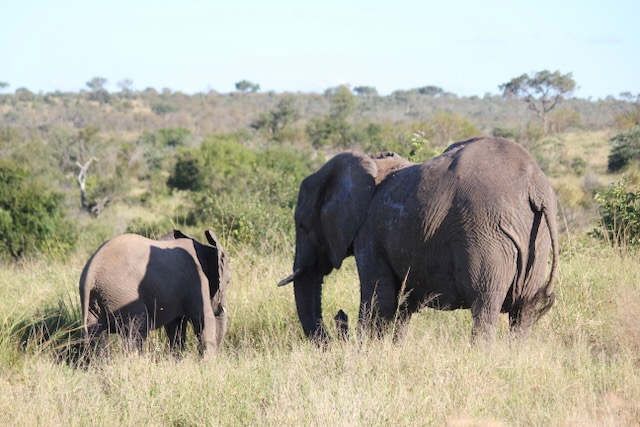
We approach zebra and giraffe, who move away with alacrity. Still, we see them from foot, at their level, without the need for binoculars. We see elephant in the distance and head that way, but they’ve melted into the bush and impossible to find. Given the size of an elephant, this always amazes me.
I spot a boomslang – one of the most venomous snakes in the world – perched precariously in a tree along our path. It’s an opportunity for a lesson in the different types of snake venom – something I’d not known before. This one is hemotoxic – it destroys red blood cells and prevents blood from clotting. Decidedly unpleasant. Luckily, they are shy, and we leave each other in peace.
Later on, in camp, we see a Mozambique spitting cobra, which has a cytotoxic venom. We keep well clear and it too goes on its way. The other terrifying snake in South Africa is a black mamba – with its neurotoxic venom. The bush will be rife with them, but we did not see any (thank the gods).
Our guide is right, there is more to a walk in the Kruger than animal spotting. We learn about different plants and how they’re used by local tribes. Papyrus to make mats, the leaves of devil thorn as a shampoo substitute. We learn about the round leaf teak, called the elephant’s toothpick, and the leadwood trees, hard as nail. The mountains in the distance, and the history of this land and the park itself. The warrior nation of the Zulu’s, the grit of the Afrikaners, and the greed of the British. Our guides are generous with their stories, weaving in their own cultural knowledge and experience as they point out different spoor, and tell us tales of other adventures.
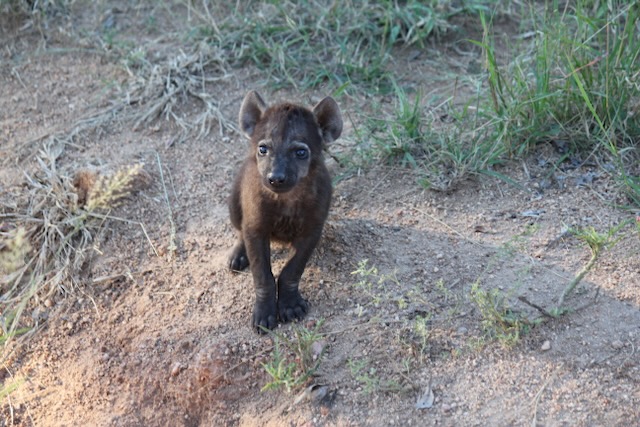
The whole experience is a delight. But there are some moments that stand out. Seeing hyena babies tumbling over their exhausted mum (do they not look like Tasmanian Devils?).
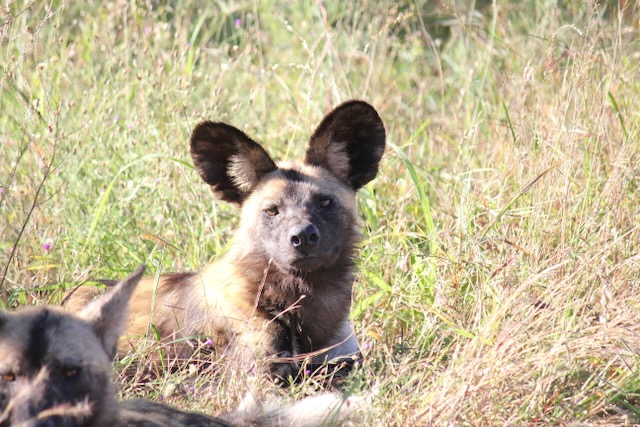
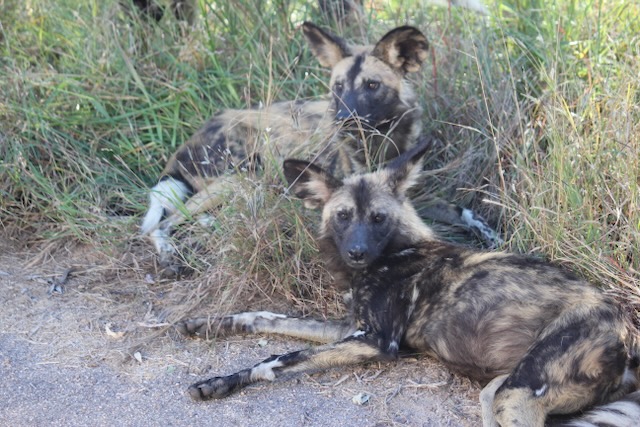
A road full of wild dog – on my “see in the wild” list for ages.
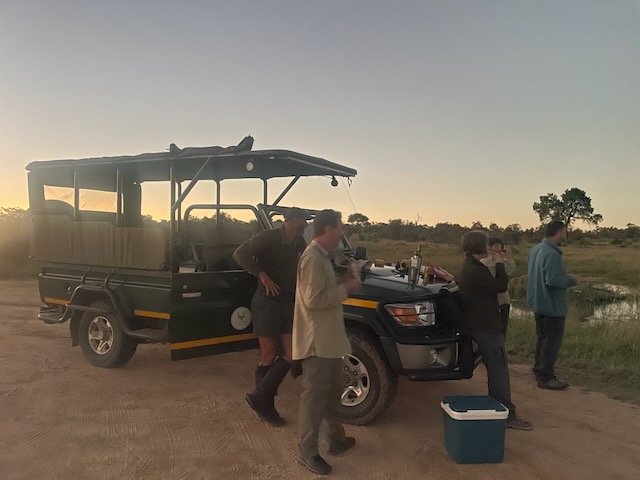
Sundowners next to a dam, where a territorial hippo performed all the status tricks in the book. Spraying his poo everywhere, opening his mouth wide to show off all his back teeth. And hearing our friend teach one of the guides about the constellations emerging in the sky above us. Later on, in trade, Thomas gave us the low down on the various tribes that share this region of South Africa.
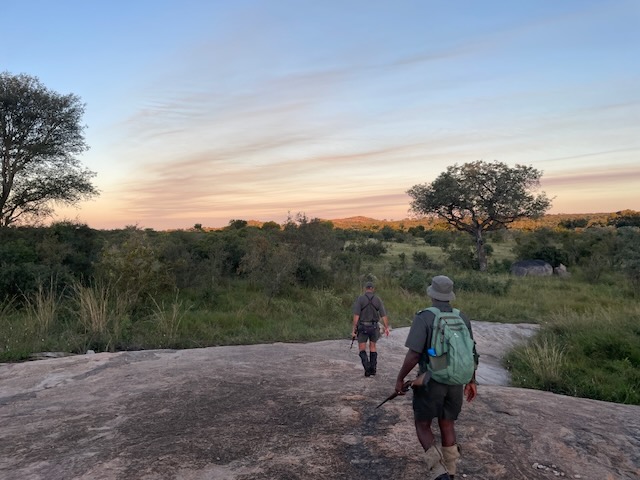
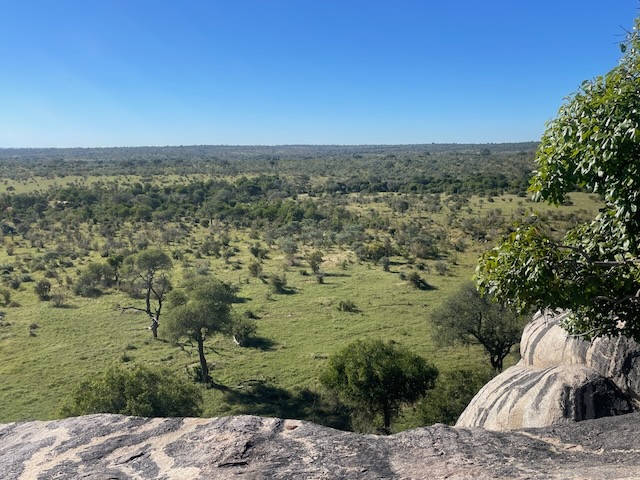
Scrambling up a tottering pile of rocks (“last week there were lion sitting here”, our guide says in passing, “we had to find somewhere else for morning tea”), above a lush green grassland, watching wildebeest chase each other, zebras kick up a fuss, elephants meander with babies and giraffes sail past. It was all we could do not to launch into a rendition of the opening chorus of “Circle of Life” (Lion King).
And on the last evening, after a somewhat hysterical, giggle ridden river crossing (“the animals are all long gone” says our guide with a smile) circling around a herd of buffalo, hearts in throats, to get into a good (and safe) position to view them. We’ve all seen the lion king. We know from buffalo.
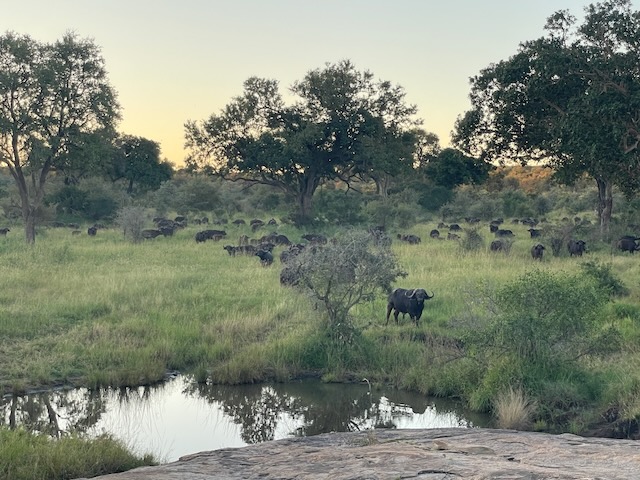
Later, safely back at the river, we celebrate with snacks and gin and storytelling. And that’s the heart of it really. The real value. Being with friends and family, and sharing in the mutual delight of this special place, in this special country. Joy, I think, is almost always doubled when shared.
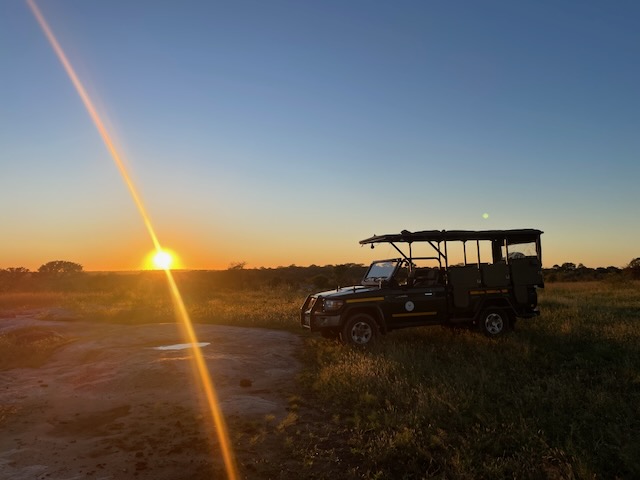
Next up, Sweni, says the man of the house. For lions. Eeek.


Leave a Reply