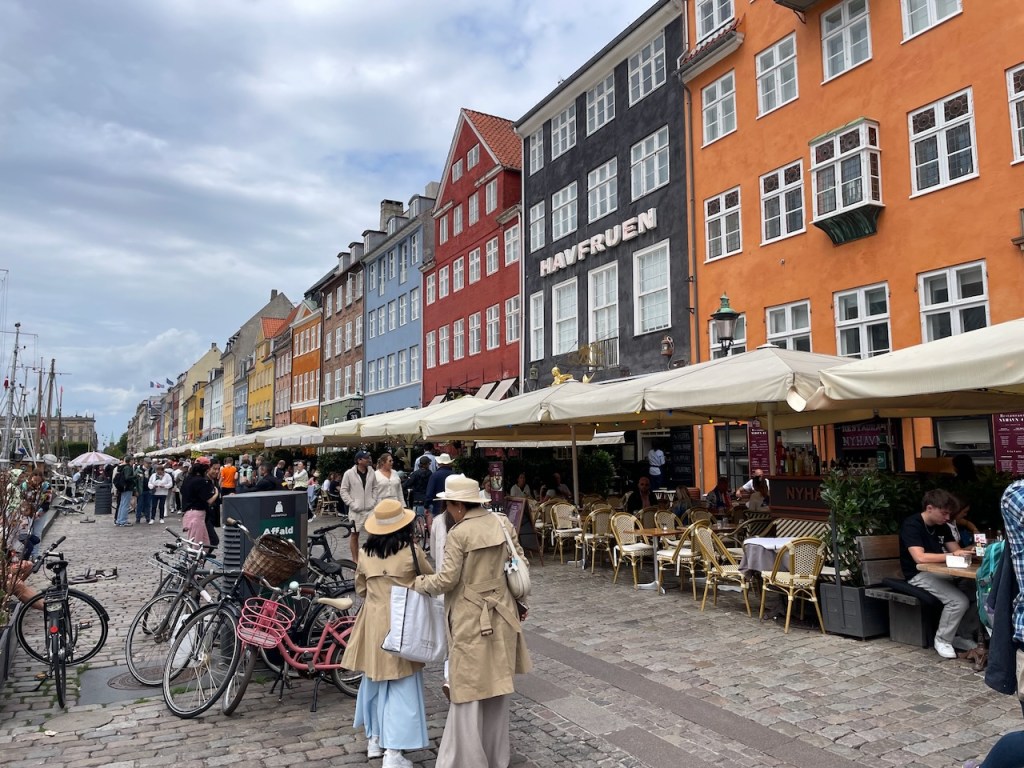
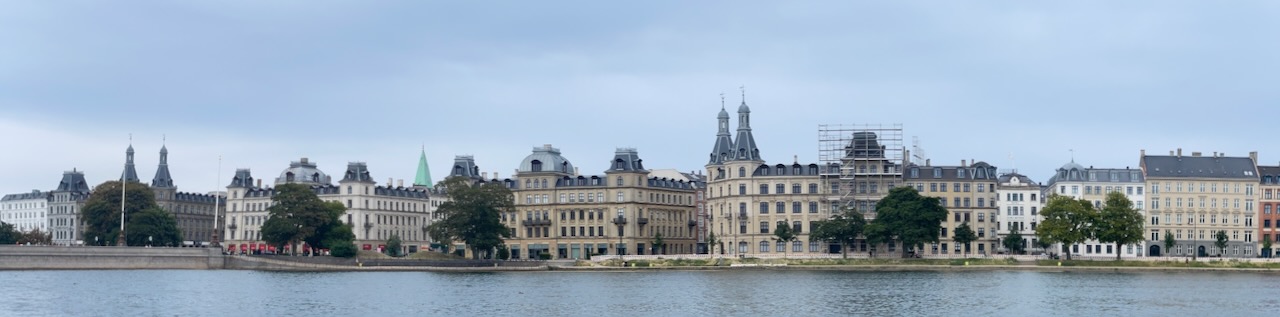
Copenhagen feels other-wordly. Quiet, considered, content. It has a particular design aesthetic that is instantly recognisable as Danish. Simplicity and symmetry, with the odd understated flourish. There are no highrises here. Beneath an endlessly wide and strangely low sky, old buildings, with evenly placed windows perch beside waterways. There is water everywhere. We are on an island after all. But you feel as though you’re on the edge of the world. In many respects, you are.
I’ve only got 2 days here, but it is an easy place to get around. Bikes are more numerous than cars, and the roads are wide, with dedicated bike lanes. And it’s as flat as flat can be. If you’re going to cycle anywhere choose here. I’d like to come back and see more of the wider country from the saddle of a bike.
There are lots of reasons to go to Copenhagen. Seeing The Little Mermaid is not one of them. But if statues are your thing, then Copenhagen – like much of Europe – has a surfeit of them.
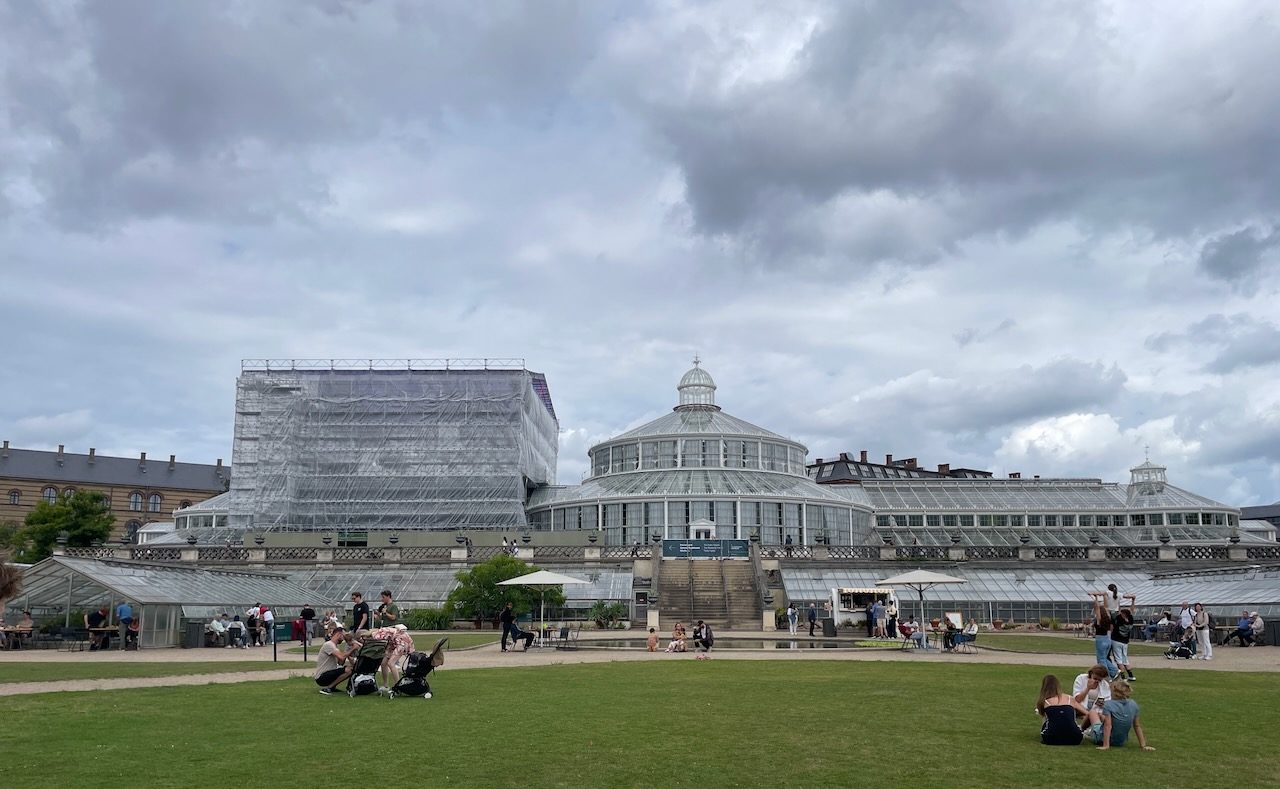
Our first stop, moving out from our excellent hostel is the lush green University of Copenhagen Botanical Gardens (Botanisk Have). Here statues abound amongst trees and ponds. Bridges cross streams and baby moorhens skittle about on giant lily pads, much to the delight of everyone.
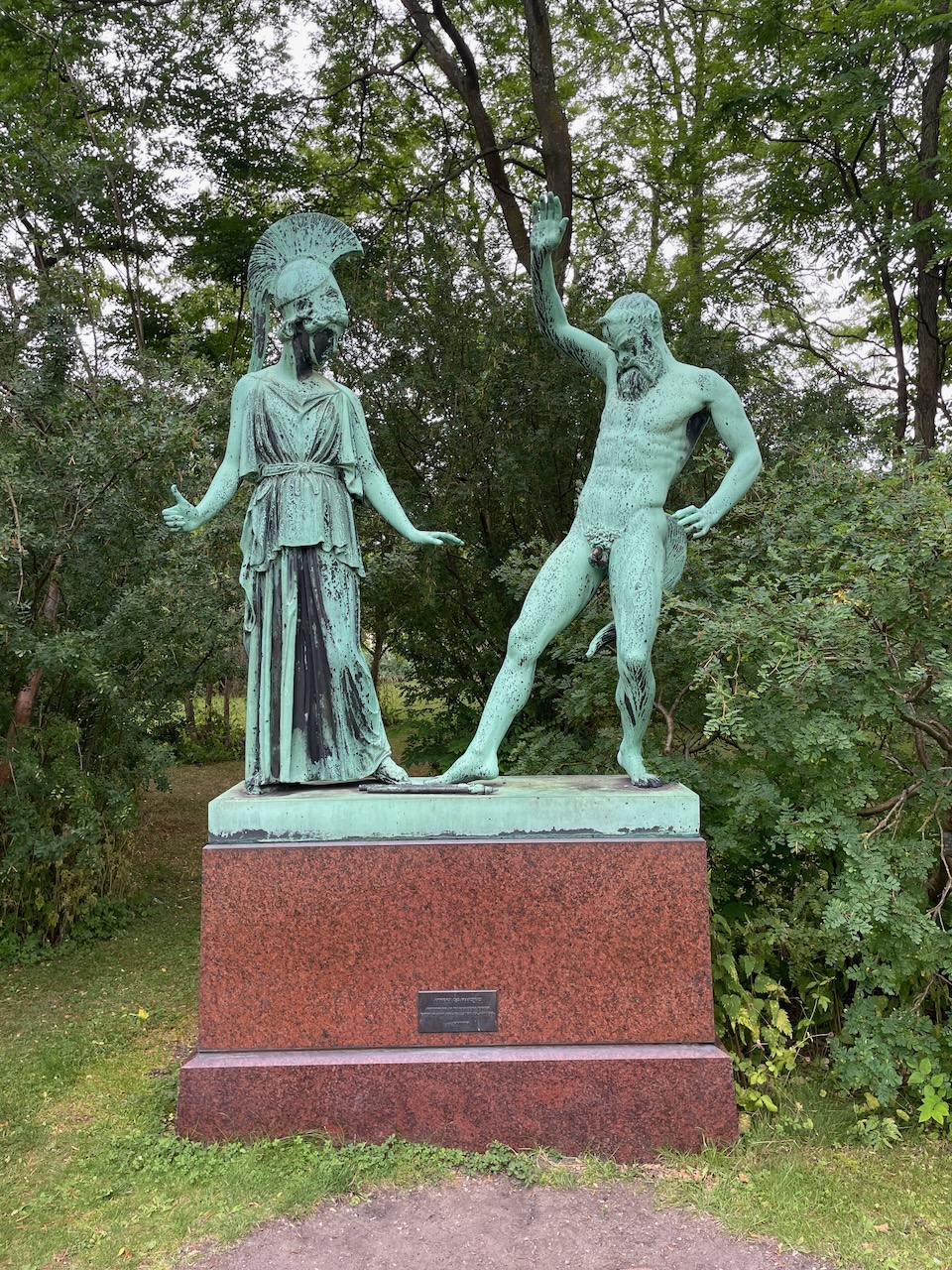
Created in 1870, the gardens are part of the Natural History Museum, and home to many bronze casts of classical and historical statues. My favourite is a 100 plus year old copy of the very ancient Athena and Marsyas, the original of which stood in the Acropolis of Athens around 450BCE.
I don’t know the history when I see it across the lawn. But the depth of comedic commentary on the human condition catches my eye straight away. “I see your offer, and I am not impressed”, she says.
Perhaps more famously, the gardens host a magnificent array of 24 glasshouses, inspired by Crystal Palace in England. You could spend a day here, relaxing under the trees and exploring the medicinal gardens, but on our itinerary it’s a momentary stop before we hop back on our bikes.
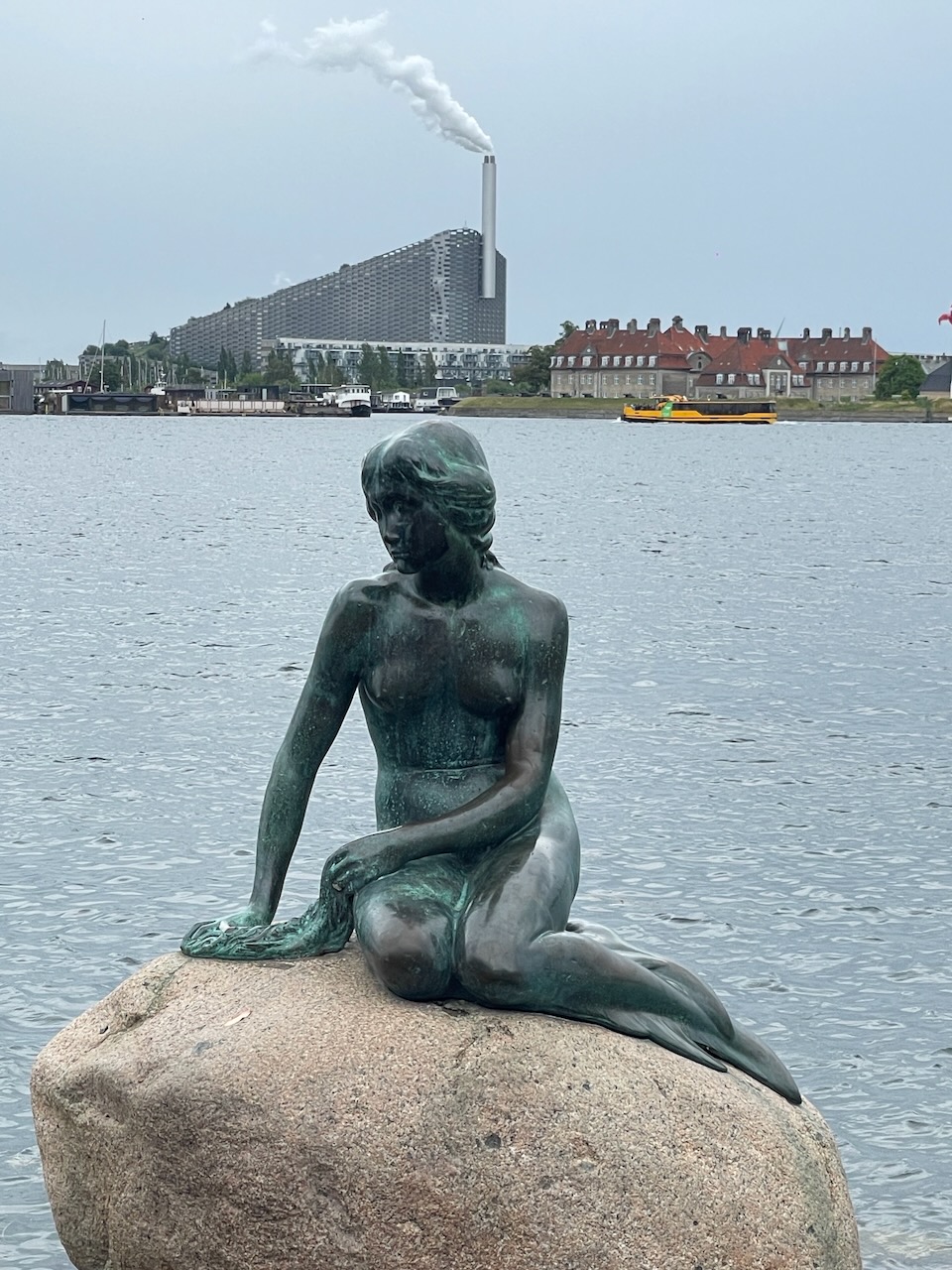
Onwards then to the famed Little Mermaid, who sits demurely on a rock partially submerged in the sea. A crowd of people gather around and we all have to jostle for photos. Across the water, Copenhill, a futuristic “resource handling centre”, with its roof operating as an outdoor recreational hill and ski-slope, showcases ever more Danish ingenuity. When it comes to the use of innovation and design, the world could learn a lot from the Danes.
We are circumnavigating the town centre, with its palaces, museums and shops. Worth a visit next time.
Instead, we head to the colourful, historic Nyhavn. Bright buildings line the canal. Waterfront cafes buzz with tourists and locals alike. The masts of old boats tied alongside the canal clink in the wind. An old violinist stands on the cobbled street and adds haunting notes to the scene.
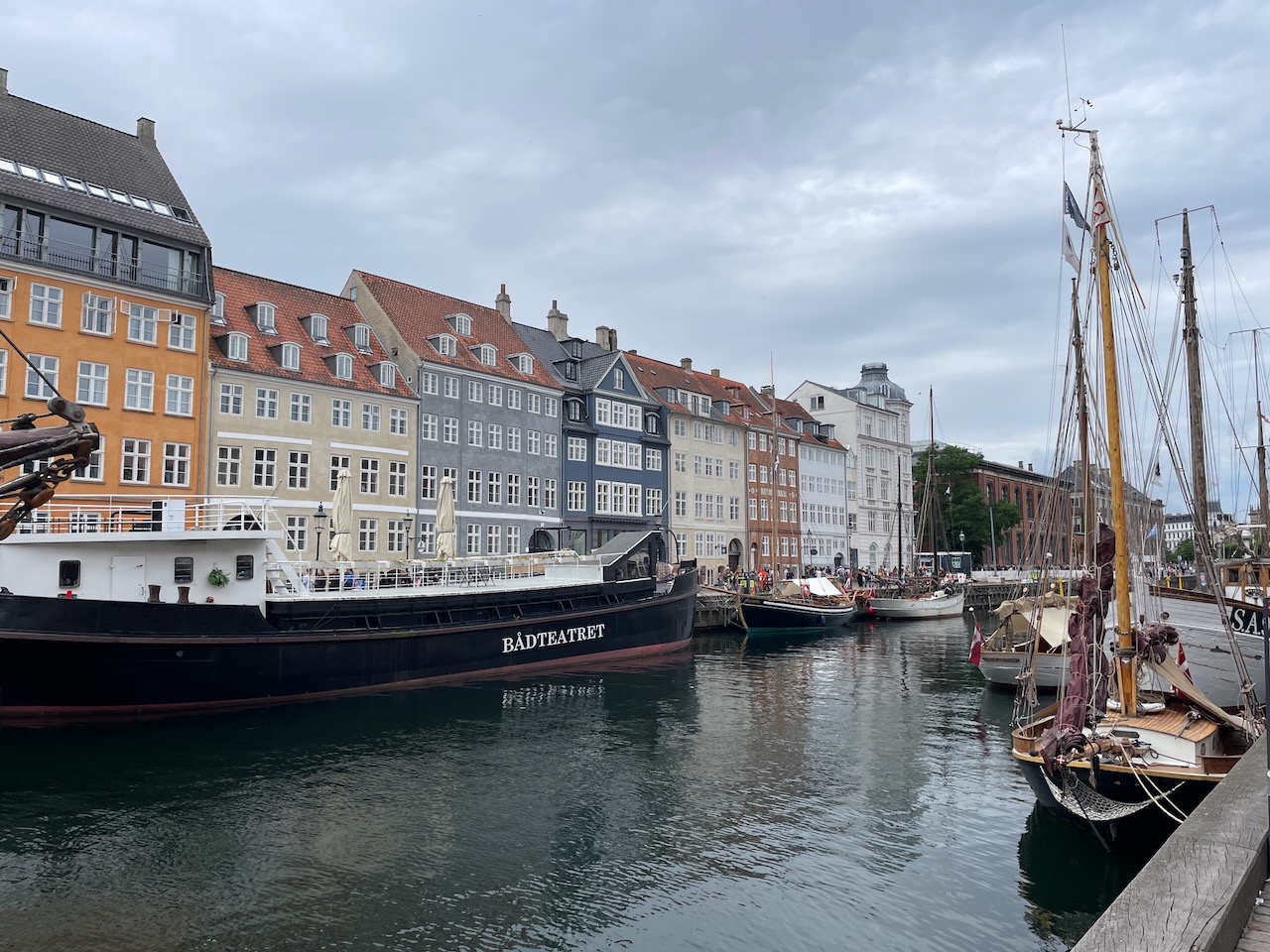
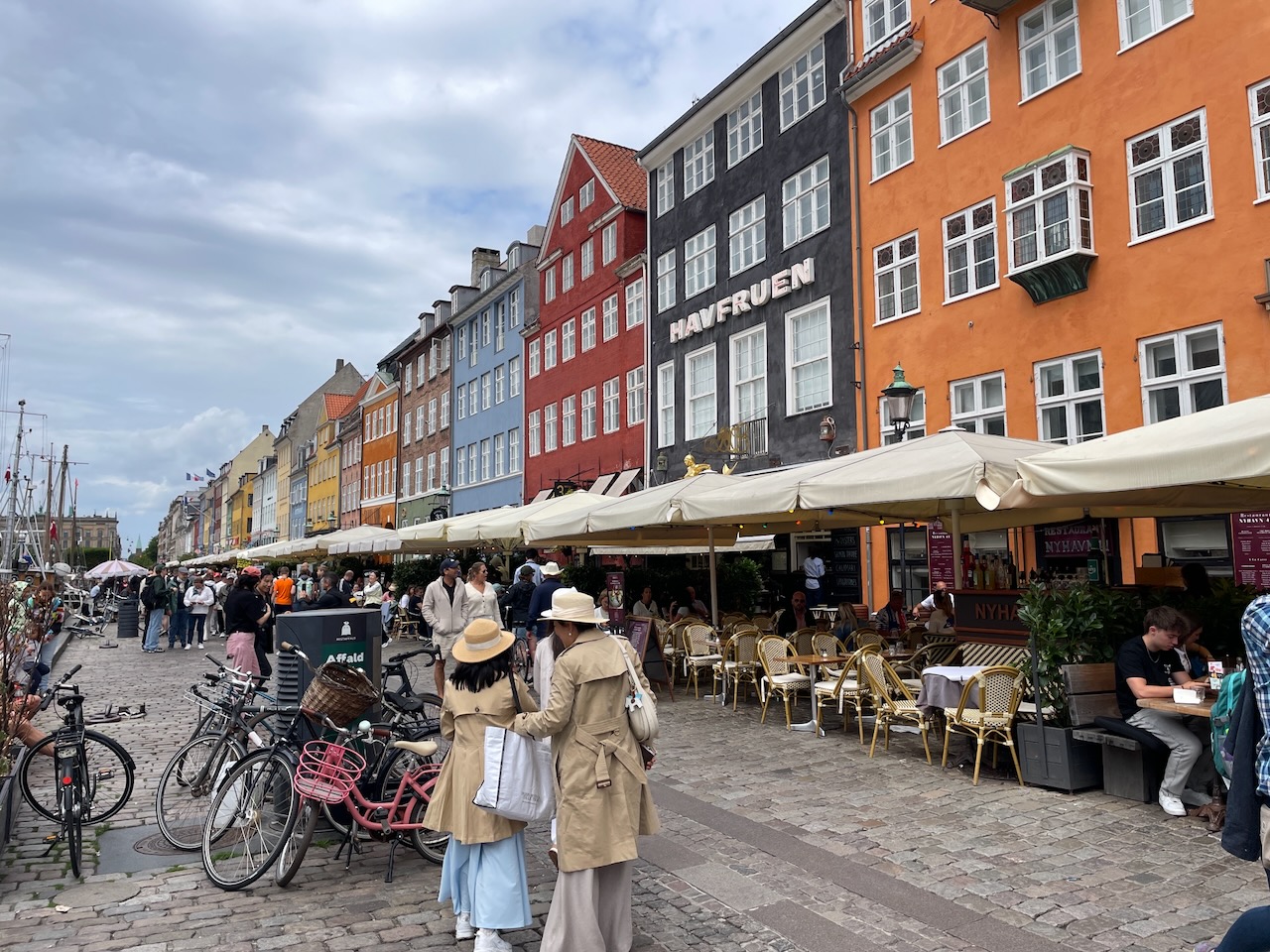
Our bike ride takes us along the foreshore, past yet more statues and works of art scattered in unexpected places. David stands unashamedly naked against a warehouse, and the Norse Goddess Gefion drives four straining oxen above a particularly striking fountain. Sculpture is an ancient artform, but the ability to bring life and expression to a piece of stone always strikes me as quite remarkable.
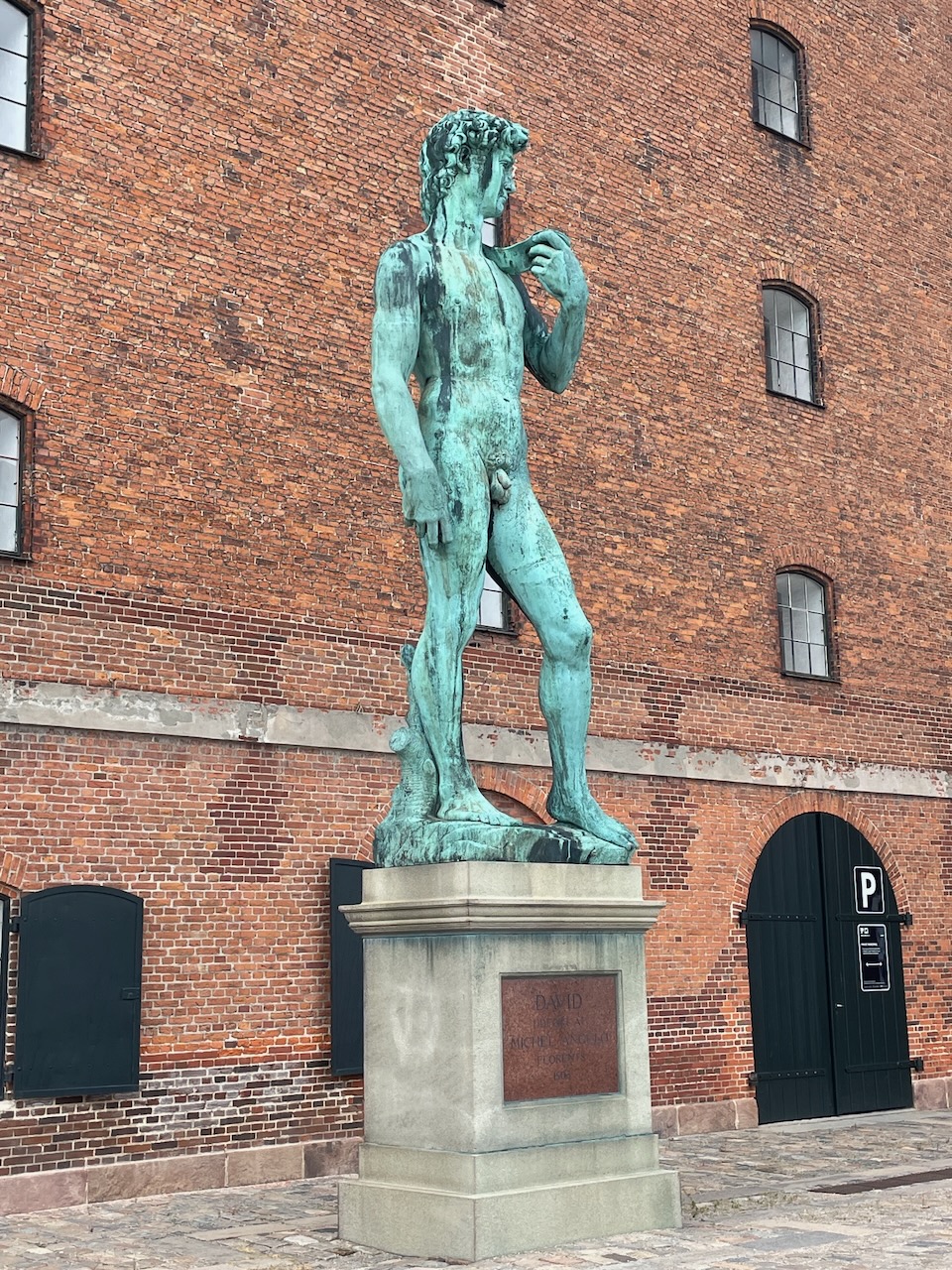
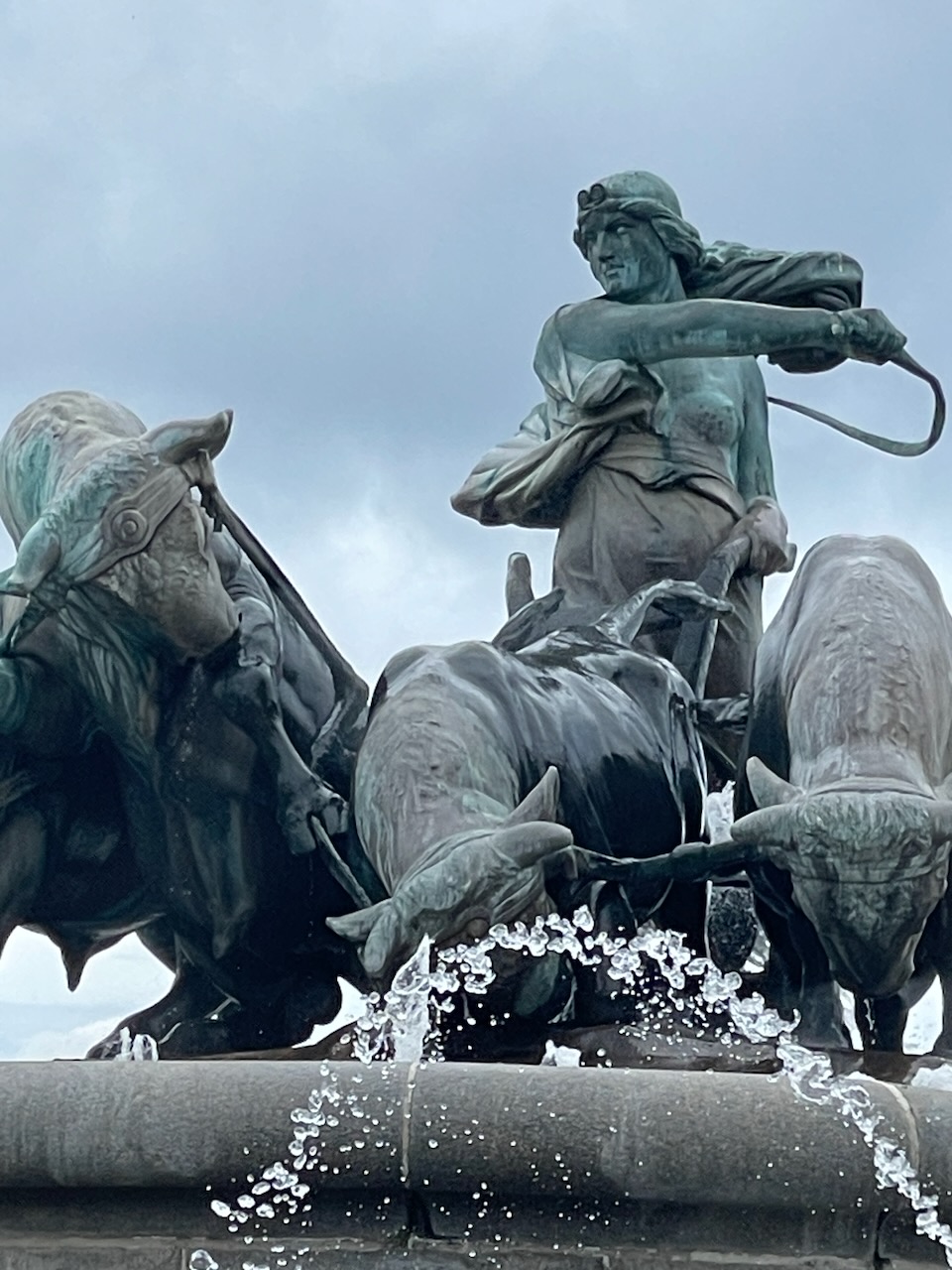
The sun comes out as we make our way further east. Copenhagen is on one of the many archipelagos that, along with the mainland, form part of The Kingdom of Denmark – Zealand. As a side note, our neighbours New Zealand are named after the Dutch province of Zeeland (Sea-land). Denmark’s Zealand is not related in any way, and means Seal Land. You could see how confusion might arise.
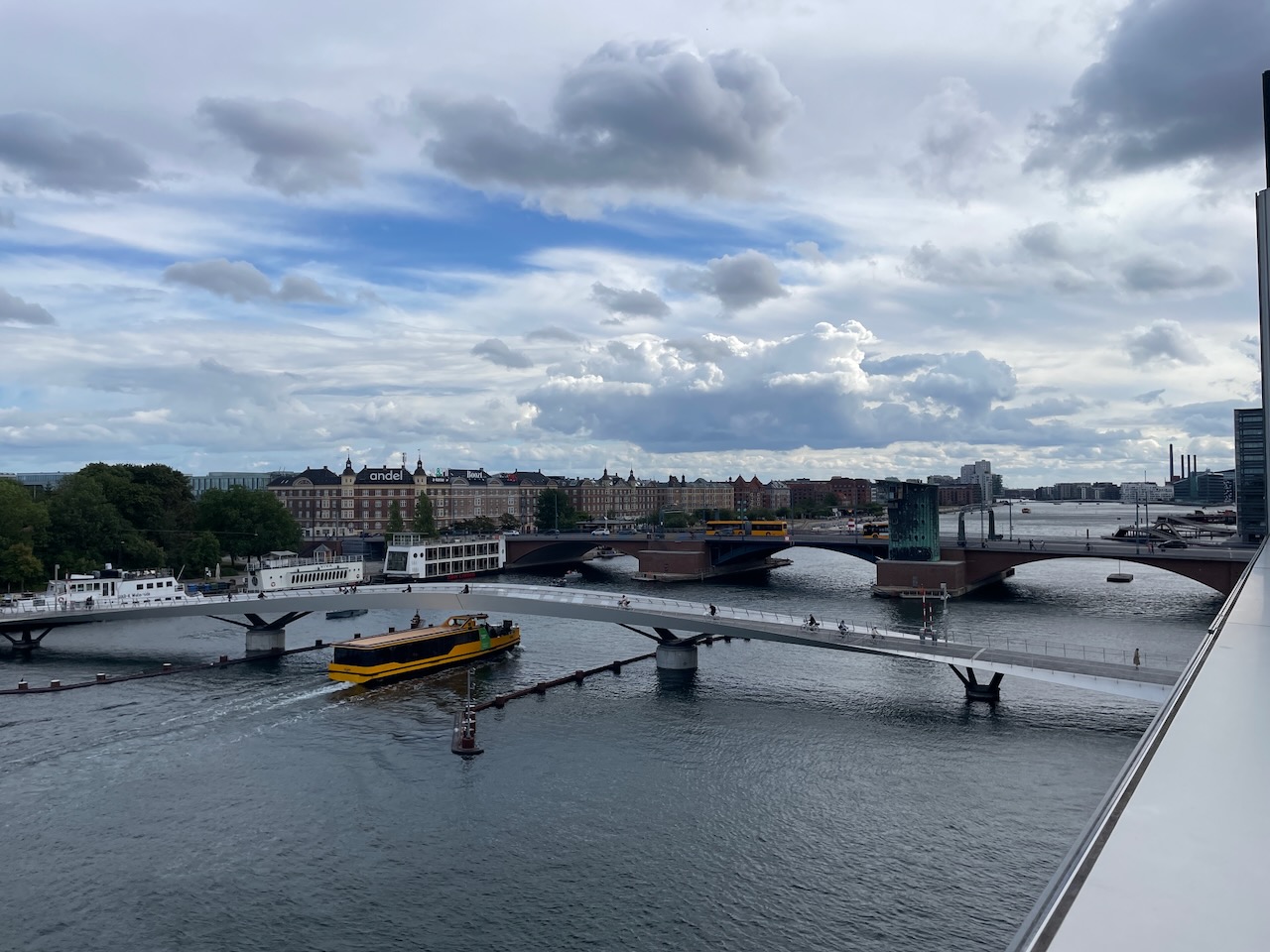
Inderhavnsbroen, Kissing Bridge, takes us over the narrow strip of water that separates Zealand from its neighbouring Amegar. Designed for pedestrians and bikes only, we are meandering through a car free zone. Bikes are plentiful though, and there is more than one occasion where we forget to look the right way and get tutted at by a stream of cyclists.
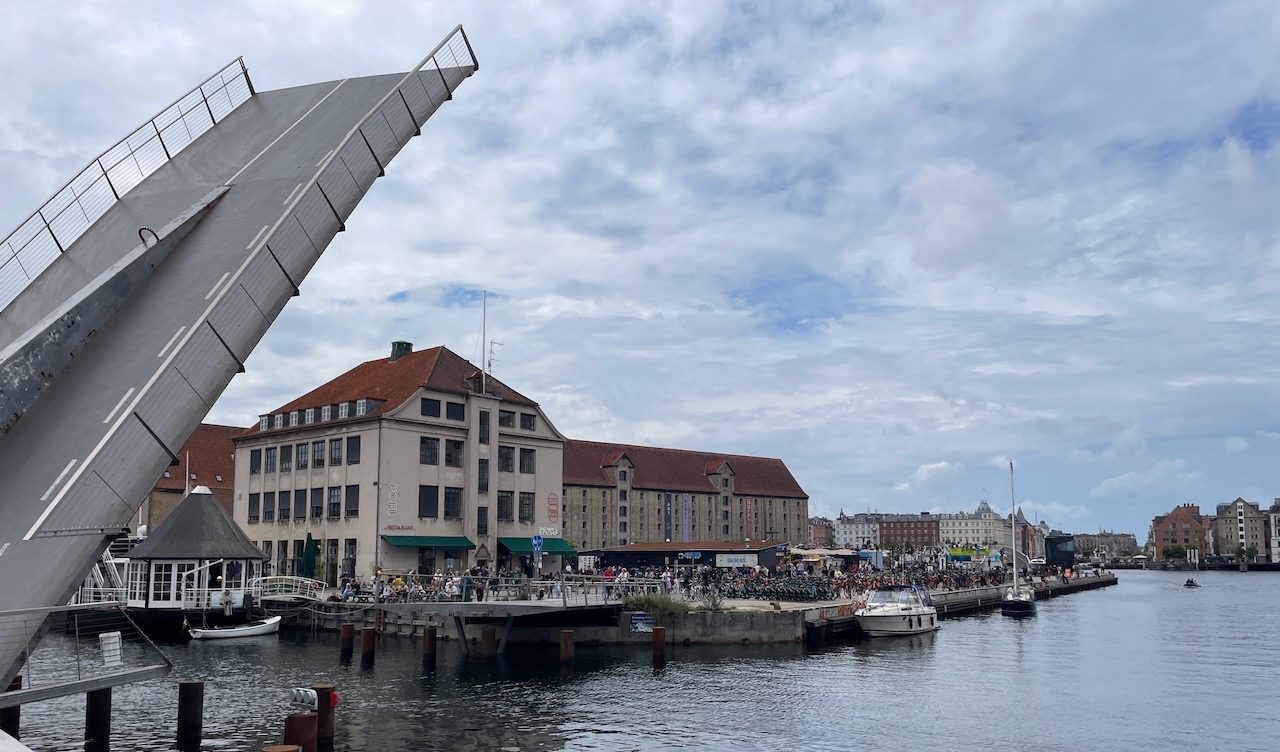
For lunch we stop at Broens – an outdoor food market, where a range of small restaurants do business from converted shipping containers. It’s buzzy and busy, the food a mix of international and local, and everyone gets their own feast before we gather at the communal tables beneath shade clothes to share them.
This is not the only place we see shipping containers converted into a food hub. For lunch the next day we head a little further onwards, to the Reffen food market. The arty food village and entertainment area in Reffen is totally charming. When we visit, it’s cool and blustery, the fairy lights blowing in the breeze and the threat of rain imminent. But I can imagine it would take off on a long summer’s evening.
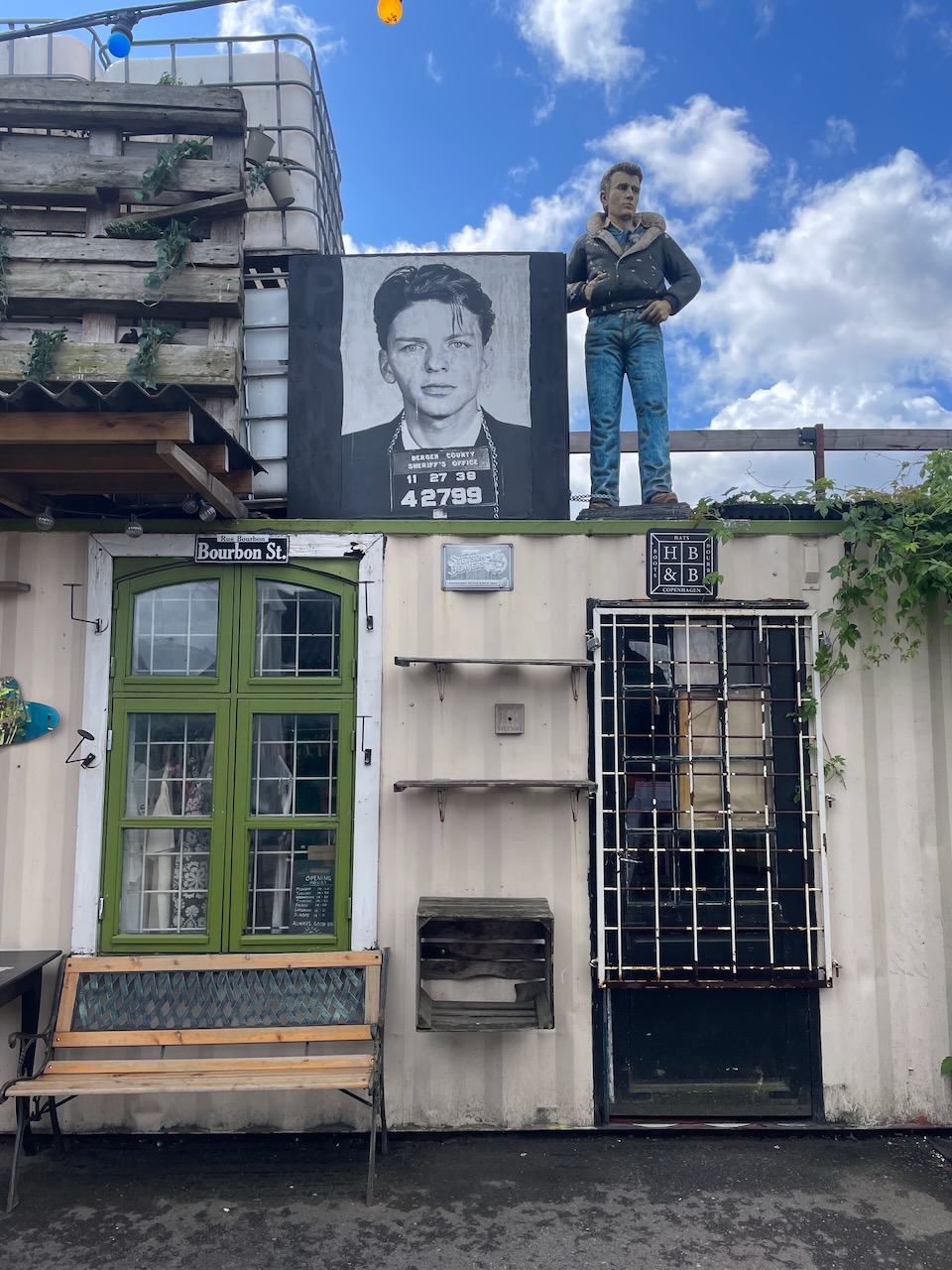
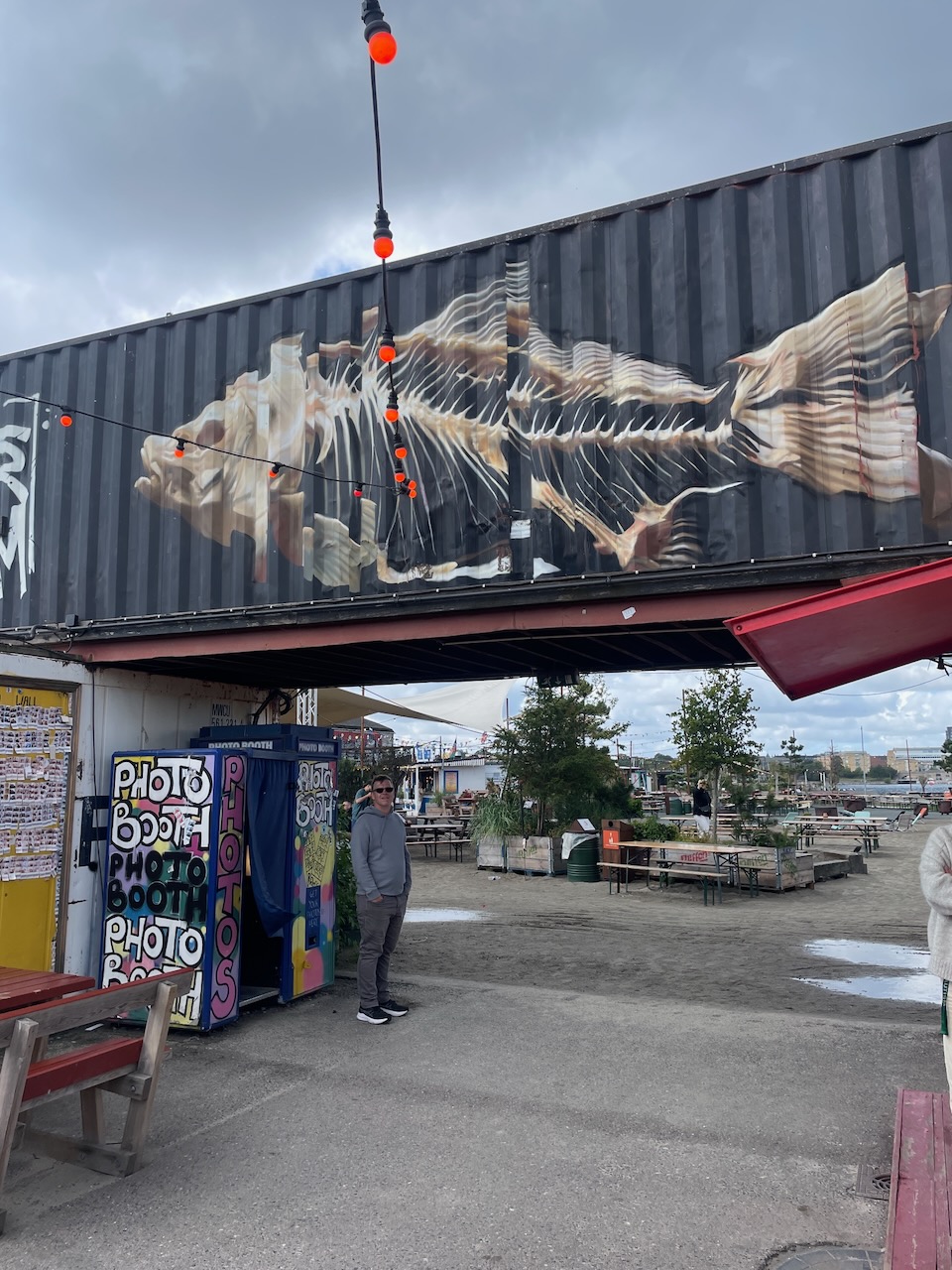
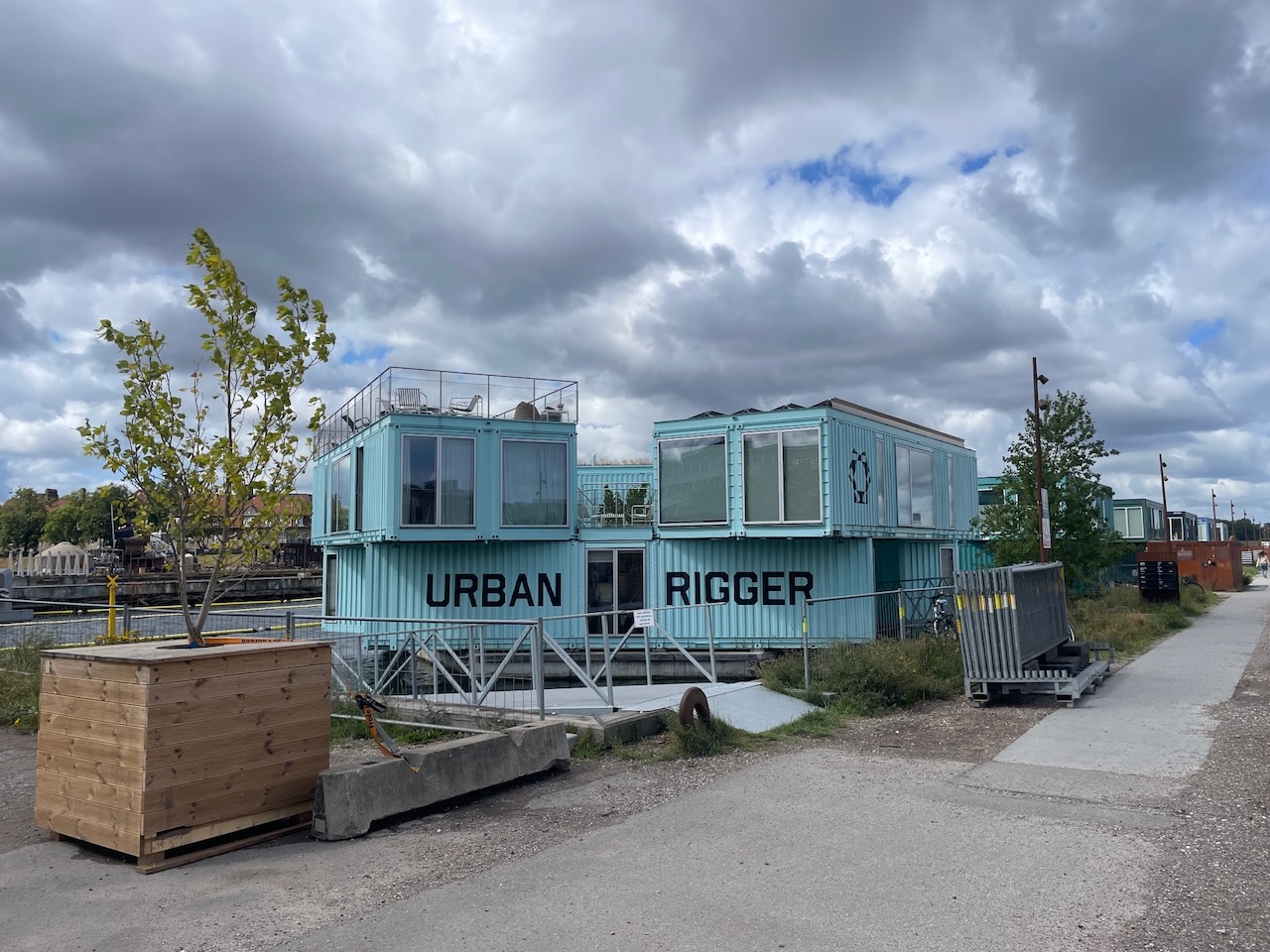
I’m struck by the quirky and clever use of shipping containers – turned into food stalls, entertainment venues, art studios and housing or offices. It strikes me that they could, with a little imagination, solve many a housing or space crisis in South Africa.
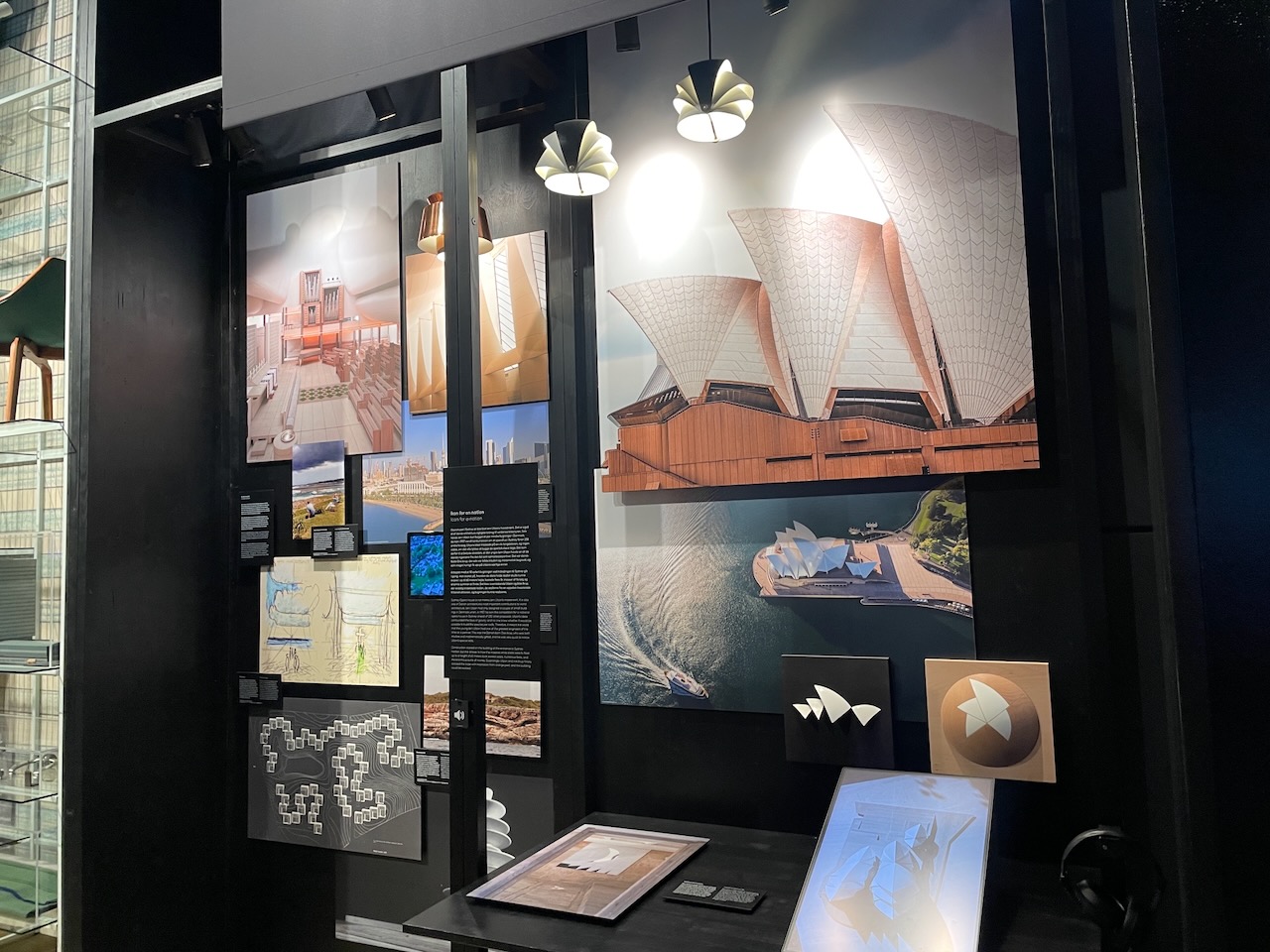
In our short 48 hours in Copenhagen, we also manage to take in the Danish Architecture Center. This is, as you can imagine, a well designed space. A four story slide takes adventurous kids and adults both down twists and turns to the ground floor. A rainbow stairway brings you back up. Even if you are not interested in the history and philosophy of Danish design, spending time exploring it gives a much greater appreciation of the architecture of the buildings all around here. Of course, as an Australian, it’s a jolt of delight to see our very own Opera House on display, and to learn about Jørn Utzon’s remarkable achievements here and elsewhere.
And if, like me, you appreciate a moment to sit and reflect. A more birds eye view of the narrow harbour and its bridges can be taken in, wine in hand, from the rooftop bar that sits above this building that seems to have been constructed from a series of glass boxes.
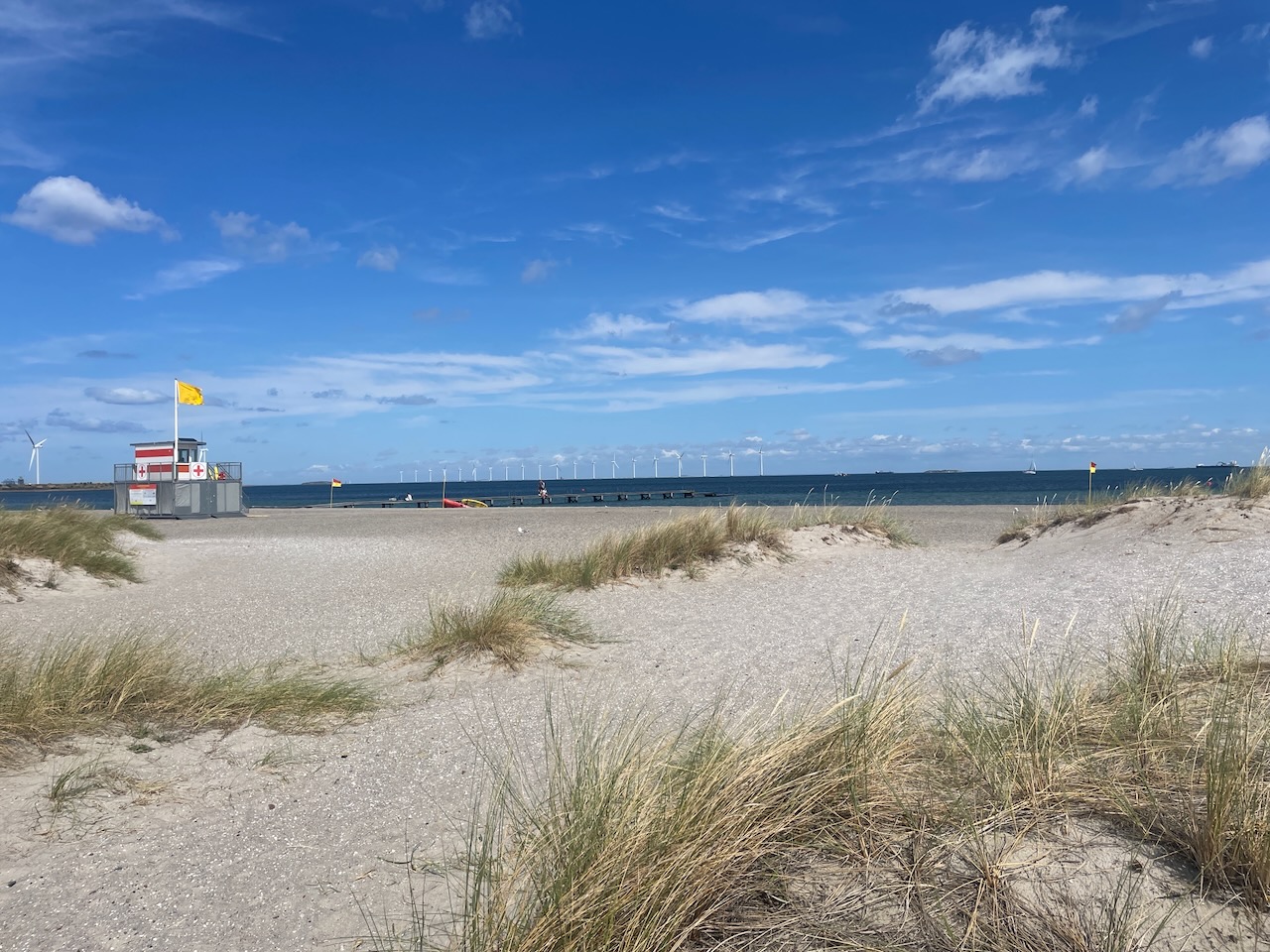
With time to kill before my flight back to the UK, I drop off my luggage at the airport and take the metro to nearby Amager beach park. From here, the bridge that connects Denmark to Sweden is visible on the horizon, and I imagine myself waving goodbye to my sister as they head onwards. It’s a windswept, low sky space, where land has clearly been clawed back from the sea. Concrete piers and bunkers squat on course sand. Straw coloured grass that keeps the sand from blowing entirely away waves frantically in the stiff onshore breeze. A line of turbines capture wind and turn it into electricity. Red sailed boats zip along the water. Coffee shops and restaurants are full of people. It’s not Bondi, but something unique to this part of the world. A “noirness” so well captured in films and books set here.
Denmark is eye wateringly expensive. But it’s worth it. Unlike the rest of Europe, which feels frantic with visitors and tourism, Copenhagen has a quiet, understated elegance, and a deep sense of confidence in itself. Cycling rather than driving slows you down, allowing a little breathing space to absorb what’s around you. There is a strong sense of deliberate choosing to be in harmony with nature, rather than aiming to dominate it. I’ve barely scratched the surface, but I’m left with a deep impression that living in compatico with the environment and space leads to a much greater sense of internal and societal satisfaction, and with it the possibilities of Hygge.
If you like what you’ve read, please subscribe.
Onwards.


Leave a Reply