

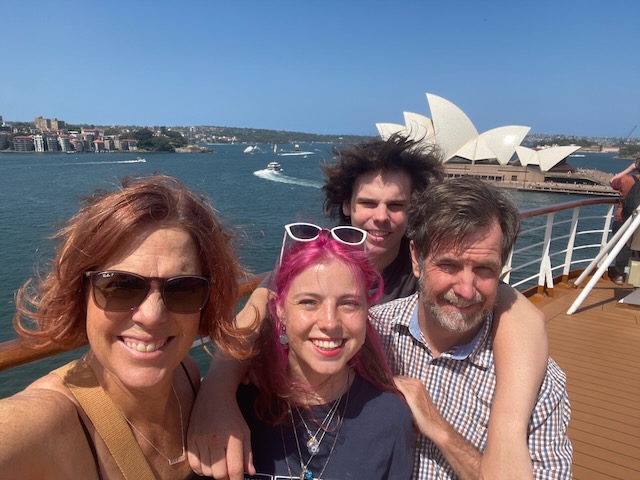
Last month we dropped our two kids off at their various university campuses. First years in different cities, doing different degrees. Two kids, two car trips packed to the brim with (some of) their belongings, two new beginnings for our two young people.
Our engagement and expectations with our children in the “going to uni” space are suffused with our own experiences. Unlike much of the preceding stages of life we’ve navigated them through, it is a stage of life we think we remember well. At least, through the lens of the intervening 30 years.
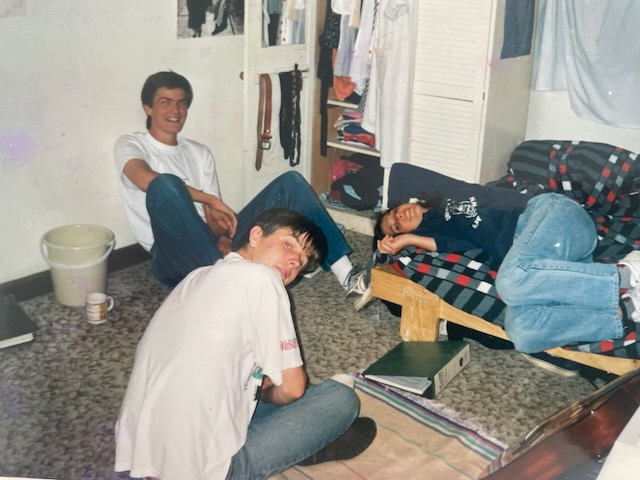
We both moved cities to go to University. It is where we met. I flew down with surely nowhere near the stuff my kids have. About R60 to my name, and probably only half their confidence. Mike came down with a Scouts/School friend who was already in second year, confidence brimming as always. Going away to university ranks right up there with the best decisions we’ve made.
It feels like we’ve come full circle.


And of course, now we have fully entered that empty nest stage. New experiences for us.
Driving back from Melbourne, a drive we have never done before, we had hours to talk about the shape of our lives now that the kids were living in their own spaces, fending for themselves and getting on with their own journeys towards adult self-sufficiency. And talk we did. About everything and nothing. We’ve been having conversations for 35 years, but somehow we still have lots of things to say. I am sure I have more words in me than Mike, but I’ve got to the point where I’m more comfortable with silences too.
But what I noticed as we meandered our way back to Sydney, the wide sweep of Australian countryside turning orange in the setting sun, a podcast on happiness, interspersed with our take on it, playing in the background, was that I felt different. Different from the past while, but not wholly unfamiliar.
I had the very strong impression of “oh, here I am”, as though I had suddenly found myself back in my own skin, without even being aware that I, the sense of self in my own story, had been missing for so long.
Maybe that sounds strange. And maybe it’s just me. Somewhat highly strung and sort of helicopterish in my parenting style. But I don’t think so. I think it was the distinctive feeling of the cognitive load being lifted, and with it, my sense of self re-aligning.
There is no better word for what I felt than lighter.
I think so much of myself, for the last two decades, was directed towards caring for – literally looking after – my family. A lot of my attention was always on them. Looking out for them, keenly engaged with trying to keep them safe and alive and happy. Solving problems, sorting things out. Actively parenting. And I have zero regrets about that. It is one of the most brilliant parts of my 52 years walking this earth.


But it takes up a lot of cognitive space. We talk about the mental load of parenting like it is a never-ending list of tasks to be done. But it is more than that. It eats into our attention (which can be defined as the things we note and see and consciously process) which is limited in its capacity, shoving out other things it deems less important. And they might well be.
Dropping the kids off at the start of their adult lives, made me realise that my job as an active shaper in their choices is finished. The decisions they make, and the consequences of them, are theirs. I can no longer ensure they are eating properly or taking their meds with them when they go out or making friends and treating them right. My job here is largely done.
Not only are my parental duties reduced to “being here when you need me”, but so is the worry load. Obviously I’m me, so there is a baseline of general worry running under everything I think and do and say. But I watched myself put down the extra weight of worry I carried around as a parent. The worry that comes from believing you can fix things, control things, keep things right. Worrying is probably always pointless, but it is definitively so when you can’t actually do anything about the situation. When you have no control. I can’t even worry about them staying out late, because I don’t know. So, I’ve chosen to worry less.
Let’s not rely on Meta to stay in touch. Subscribe here.
Cognitive scientists study extended cognition in things like how we use tools. How is it we can write with a pen and cut paper on a straight line with a pair of scissors with such exquisite control? And, it turns out, our brains, which makes maps of the outside world in neural real estate, extends those maps to include tools as extensions of our body parts. You can use them because your brain sees them as part of you.
I think this is the same with parenting. It changes the map of you in your brain, and as a consequence, your sense of self. The self itself is much debated concept, but it is evident, even in this example, that it is a flexible and changeable creation of the brain, with an illusion of permanence we all take for granted.
With parenthood, my sense of self as a human being, a person in my own right, changed without me even being aware of it. It changed to having motherhood as its central focus. And it changed again to one with me as its central focus when my role changed. That is what I think I felt in the car, a snapping back to a different sense of self as the cognitive maps got redrawn.
And so onto the next stage of life. With our ever-increasing creaks and aches, and the space to both work, or study or chill, should we so desire it. I seem to have turned into an exercise lover, something the young girl getting her first degree in the picture above would not comprehend. And that’s the point, isn’t it. That we are not one self, with one path and one set of plans. But a variety of ever changing possibilities. And that is one of the most marvelous things about life.
Onwards,
Sharlene


 Midlife Unpacked
Leave a comment